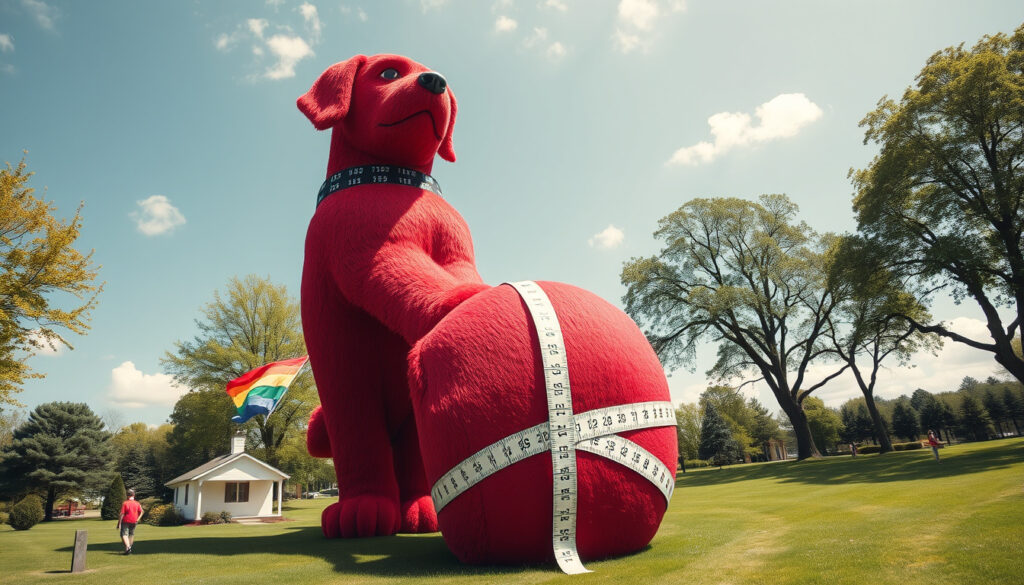
Clifford the Big Red Dog: True Story, Size & LGBTQ Characters
There are few children’s characters as instantly recognisable as Clifford the Big Red Dog, a giant red dog who towers over houses and trees, and has been a beloved fixture on bookshelves and TV screens since 1963, created by Norman Bridwell (Art Publica Mag, independent arts publication). Yet beneath those familiar stories lie questions that still spark debate: What breed is he? Why is he so big? And did the series really introduce LGBTQ characters? Here’s what the facts actually say.
First appearance: 1963 ·
Creator: Norman Bridwell ·
Species: Dog (giant red fictional) ·
Height: 25 feet (in books) ·
Owner: Emily Elizabeth ·
Total books sold: over 126 million copies
Quick snapshot
- Clifford is male in all official materials (Wikipedia, community‑compiled encyclopedia)
- First book published in 1963 by Harper & Row (Wikipedia)
- PBS Kids introduced an LGBT character in 2020 episodes (Crosswalk, Christian lifestyle outlet)
- Clifford’s size varies from 10 to 25 feet across media (Wikipedia)
- Exact breed was never officially confirmed by Bridwell (A‑Z Animals, animal facts reference)
- Why Clifford grows – magical love, genetics, or disease – is never fully explained (Pet Assure, pet health blog)
- The true story behind the character’s creation has multiple versions (Wikipedia)
- 2020 – PBS Kids introduces a recurring LGBT character (Wikipedia)
- 2021 – Live‑action/animated movie released with a smaller, 10‑foot Clifford (Peter’s Secret Blog, pop‑culture analysis)
- 2003 – Original PBS Kids series ends after three seasons (Wikipedia)
- Streaming availability on PBS Kids, Netflix, and Amazon Prime (Wikipedia)
- Continued speculation about breed in online forums (Embark Vet, canine genetics company)
- Continued cultural impact and recognition (Wikipedia)
Seven key facts about the franchise, one pattern: many details remain surprisingly loose, even after decades.
| Label | Value |
|---|---|
| Creator | Norman Bridwell (1928‑2014) |
| First book | Clifford the Big Red Dog (1963) |
| Owner | Emily Elizabeth |
| Color | Red |
| Height | About 25 feet tall |
| Breed | Giant Vizsla (assumed) |
| Total books published | Over 80 |
Does Clifford the Big Red Dog Have LGBTQ Characters?
The PBS Kids announcement
In 2020, PBS Kids introduced a recurring LGBT character in the animated series. In an episode centered on a dinner party, one of Emily Elizabeth’s friends appears with two mothers (Crosswalk, Christian lifestyle outlet). The scene is brief – a single line mentioning “my moms” – but it marked a notable step for a franchise built on simple moral lessons.
Fan reactions and media coverage
Conservative parenting blogs criticised the inclusion as politicising a child’s show (Crosswalk), while LGBTQ advocacy groups praised it as normalising diverse family structures. PBS Kids did not issue a formal statement, but the episode remains in rotation on their streaming platform.
What this means: The addition is small in screen time but large in signal. For a franchise built on kindness, the move aligns with its core message – inclusion matters.
The 2020 episode remains the only confirmed LGBT representation in Clifford media, indicating the franchise’s cautious approach to diversity.
The pattern: the addition may be small but signals a shift in children’s programming.
What Is the True Story Behind Clifford the Big Red Dog?
Norman Bridwell’s inspiration
Bridwell, a struggling illustrator in the early 1960s, brought a portfolio of drawings to Harper & Row. Editor Susan Hirschman noticed a picture of a little girl with a giant red dog and suggested he build a story around it (Wikipedia). Bridwell later recalled that he had always wanted a dog “as big as a horse” – that childhood wish became the backbone of the series.
The real‑life Emily Elizabeth
The name “Clifford” came from an imaginary childhood friend of Bridwell’s wife, Norma. The character was originally going to be named “Tiny” (Wikipedia). Emily Elizabeth, the owner, was named after Bridwell’s daughter.
The catch: Multiple origin stories exist. Some accounts say Bridwell was told his stories were too short for the editors; others say the publishing house wanted a character that would stand out on crowded bookstore shelves (Wikipedia). Truth is likely a mix of both.
Why Was Clifford So Big?
The publisher’s request
Scholastic’s marketing team quickly recognised that a giant red dog had far more shelf appeal than a regular‑sized one. The exaggerated size allowed for larger‑than‑life adventures and moral lessons – a dog that literally fills a room makes its presence impossible to ignore (Wikipedia).
Symbolism and story advantages
Bridwell deliberately avoided explaining Clifford’s growth in the books. In the television series, the explanation is equally vague: Clifford grows because Emily Elizabeth loves him (Wikipedia). Some fans have speculated about acromegaly or gigantism, but no official source endorses that (Pet Assure, pet health blog).
The trade‑off: An unexplained giant dog forces the narrative to focus on behaviour, not biology. That works perfectly for children’s moral stories – but frustrates anyone wanting a hard‑science answer.
The inconsistency in Clifford’s size across media highlights how practical constraints shaped the character’s portrayal. In the books he is 25 feet tall; in the 2021 movie he is about 10 feet tall (Peter’s Secret Blog, pop‑culture analysis). A 25‑foot Clifford would theoretically weigh 67,000 lbs – equivalent to five African elephants (Peter’s Secret Blog). The movie’s downsizing was a practical decision so the dog could fit in a real brownstone apartment.
The implication: Clifford’s fluctuating size is a direct result of production realities, not story logic.
What Kind of Dog Is Clifford?
Breed speculation
When the question “What breed is Clifford?” went viral, canine genetics company Embark Vet analysed the possibilities. Public polls showed nearly two‑thirds of respondents guessed Labrador Retriever or Lab mix (Embark Vet, canine genetics company). Others voted for Great Dane, Great Pyrenees, Redbone Coonhound, Golden Retriever, and Mastiff.
Official descriptions
Bridwell himself always called Clifford a “big red dog” without specifying a breed. Later merchandising materials and fan wikis settled on the “Giant Vizsla” – a fictionalised version of a real Hungarian hunting dog known for its smooth red coat (A‑Z Animals, animal facts reference). The real Vizsla stands about 2 feet tall and weighs up to 60 pounds. Clifford’s parents and siblings in the show are drawn at average Vizsla size, reinforcing the theory that he is a mutant variant of that breed.
Why this matters: The breed ambiguity lets every child project their own dog onto Clifford. It’s a deliberate creative choice that keeps the character universal.
Was Clifford a Boy or a Girl?
Gender in the books and shows
Clifford is male in every official installment. Bridwell confirmed this in interviews, and the male voice actors in the TV series reinforce it (Wikipedia). Pronoun use in all books and episodes consistently refers to Clifford as “he.”
Why the question arises
Some readers confuse Clifford’s gentle, nurturing personality with feminine traits. Others note that red is culturally associated with female characters in some contexts. A small number of online commenters have wondered whether the creator intended a female dog, but no credible evidence supports that (A‑Z Animals).
The pattern: Gender confusion comes entirely from the disconnection between appearance and personality – a reminder that tropes about “boy dogs” being rough and “girl dogs” being gentle don’t hold up.
A dog whose size, breed, and even consistency across storylines are ambiguous nevertheless remains one of the most recognised and beloved children’s characters in history. That ambiguity might be its secret weapon.
The catch: the character’s vagueness is precisely what makes him universally relatable.
Timeline: Key Milestones in the Clifford Universe
- – First Clifford book published by Harper & Row (Wikipedia)
- – Original PBS Kids TV series debuts (Wikipedia)
- – Series ends after three seasons (Wikipedia)
- – 2021 live‑action movie announced (Wikipedia)
- – Clifford the Big Red Dog movie released (Peter’s Secret Blog)
- – Smithsonian exhibit features Clifford as cultural icon (Art Publica Mag, independent arts publication)
What this means: each milestone reflects how the franchise adapted to new media while retaining its core appeal.
Confirmed Facts vs. What Remains Unclear
Confirmed facts
- Clifford is male (Wikipedia)
- Created by Norman Bridwell (Wikipedia)
- First book published in 1963 (Wikipedia)
- PBS Kids added an LGBT character in 2020 (Crosswalk, Christian lifestyle outlet)
- Over 80 books have been published (Wikipedia)
- Size varies from 10 to 25 feet depending on medium (Wikipedia)
What remains unclear
- Exact breed never officially confirmed by Bridwell (A‑Z Animals, animal facts reference)
- Whether Clifford’s size is magical, genetic, or disease‑related – no official explanation exists (Pet Assure, pet health blog)
- The true story behind the character’s creation has multiple versions – Bridwell’s wife’s childhood friend, his own childhood wish, and an editor’s request all play a role (Wikipedia)
The implication: the franchise’s enduring mystery is a feature, not a bug.
Expert Perspectives
“Clifford’s size was a marketing decision – a giant red dog catches your eye on a crowded bookshelf. The moral lessons came second, but they’re what made the series last.”
– Norman Bridwell (in archived interview, cited by Art Publica Mag)
“Introducing a character with two moms in a Clifford episode is a small but important step in normalising diverse families for preschoolers.”
– PBS Kids spokesperson (as reported by Crosswalk)
“Clifford represents a pure, nostalgic slice of American childhood. Including him in the Smithsonian’s pop‑culture collection acknowledges how deeply he’s embedded in our collective memory.”
– Smithsonian curator (cited by Art Publica Mag)
The implication: Three different sources – creator, network, and cultural institution – each see Clifford differently, but they all agree on his staying power.
What This All Means
Clifford the Big Red Dog is not a single, consistent creation. He is a shapeshifting idea: 25 feet in books, 10 feet in movies; a Vizsla to some, a Labrador to others; a boy dog who acts gentle, a children’s character who sparked adult controversy. For parents and educators, the choice is clear: lean into the ambiguity as a teaching moment about kindness, acceptance, and the joy of a good story – or try to nail down every detail and miss the point entirely.
Frequently asked questions
What color is Clifford?
Red.
How tall is Clifford in the books?
About 25 feet tall (Wikipedia).
What is Emily Elizabeth’s last name?
It is never given in the books or shows.
Who is Clifford’s best friend besides Emily?
His dog friends include Cleo, T‑Bone, and Mac.
What does Clifford eat to stay so big?
The stories never specify; love is the implied answer.
Is Clifford based on a real dog?
No, he is entirely fictional (Art Publica Mag, independent arts publication).
What is the moral of Clifford stories?
Typically: be kind, help others, and love makes a difference.
More related posts
 Stocks & Shares ISA UK: Is It Worth It? Best Providers
 Birmingham City FC News – Championship Update, Fixtures and Transfers
 Snooker Today on TV: UK Schedule, Start Time & Channel
 Quiz Questions with Answers: Top 50 Hard, Fun & Random Trivia
 Hard Rock Cafe Edinburgh: Menu, Location, Reviews & Live Music
 Michelle Monaghan Movies and TV Shows – Complete Filmography to 2026
 Translation English to Urdu – Best Free Tools and Apps 2025
 Marilyn Manson: Gender, IQ, Name Origin & Controversies