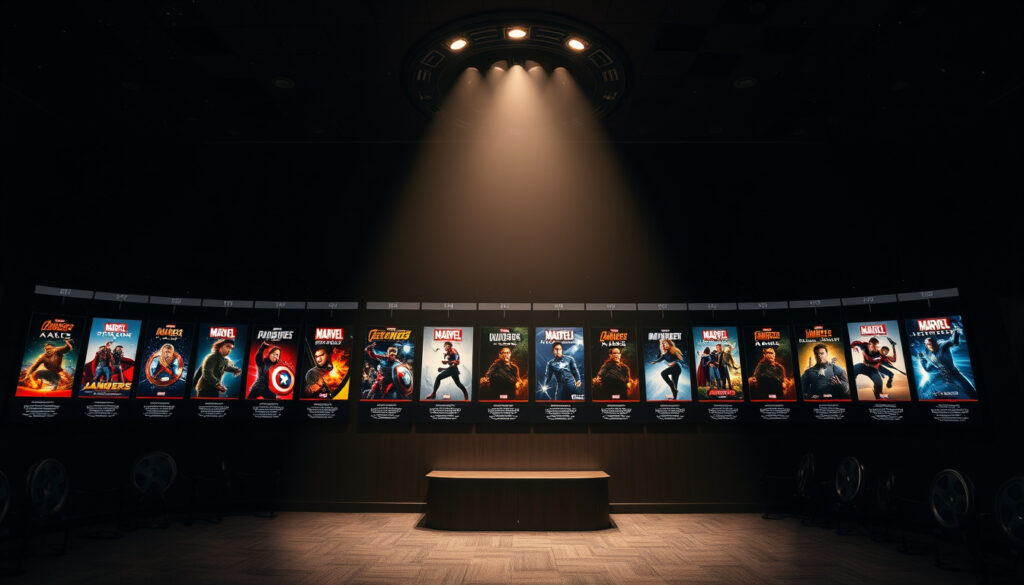
Marvel Movies in Order: Chronological & Release Guide
With 28 films spanning from 2008 to today, the MCU’s sprawling timeline can feel overwhelming. This guide lays out both the release timeline and the chronological story path, so you can choose your own adventure.
Total MCU Movies Referenced: 28 · Chronological Starting Film: Captain America: The First Avenger · Phases Covered: Phase One to Phase Five · Release Order Start: Iron Man (2008) · Key Orders: Chronological and Release
Quick snapshot
- 28 MCU films across five phases (Digital Spy entertainment guide)
- Chronological viewing starts with Captain America: The First Avenger (1940s setting) (Digital Spy entertainment guide)
- Phase 1 spans 2008–2012 with 6 films, beginning with Iron Man (Digital Spy entertainment guide)
- Exact placement of unreleased 2026 films in viewing orders remains pending official confirmation
- Disney+ series integration extent varies across different source lists
- Phase 6 end dates reportedly inconsistent across sources
- Iron Man (2008) launched MCU; Avengers (2012) capped Phase 1
- Phase 3 ran 2016–2019 with 11 films; Infinity Saga concluded with Endgame
- Phase 5 ongoing through 2025; Phase 6 reportedly begins mid-2025
- Thunderbolts* reportedly wraps Phase 5 in May 2025 per some sources
- Fantastic Four: First Steps reportedly starts Phase 6 in July 2025
- Avengers double bill reportedly closes Phase 6
The key facts table below summarizes the MCU’s structural milestones from launch through current phases.
| Fact | Detail |
|---|---|
| MCU Launch Year | 2008 |
| Chronological First | Captain America: The First Avenger |
| Movies Count in Lists | 28 |
| Key Source Lists | IMDb, Rotten Tomatoes |
| Phase 1 Film Count | 6 |
| Phase 3 Film Count | 11 |
| First MCU Release | Iron Man (May 2, 2008) |
| Phase 1 End | The Avengers (April 2012) |
What is the chronological order to watch Marvel?
Chronological order arranges MCU films by in-universe timeline rather than release date. This approach places World War II-era stories first, letting viewers follow the narrative arc from its earliest point — though some interweaved storylines mean the order isn’t perfectly linear even then.
The standard chronological sequence starts with Captain America: The First Avenger, which opens in the 1940s, followed by Captain Marvel (1990s), and then the modern-day films. According to Digital Spy chronological viewing guide, this approach offers “story immersion” for viewers who want to experience events as they unfold within the MCU timeline.
Captain America: The First Avenger
- The chronological starting point for most viewing lists
- Set during World War II; introduces Steve Rogers and the cosmic cube
- Released July 2011 per Digital Spy chronological list
Captain Marvel
- Takes place in the 1990s, filling the gap between the 1940s and 2008
- Introduces Nick Fury’s origin story and Skrull invasion
- Bridges Captain America: The First Avenger and Iron Man
Iron Man
- Chronologically near the start despite being the 2008 release anchor
- Tony Stark’s origin; establishes the Avengers Initiative concept
- The film’s May 2, 2008 release per Digital Spy release data marked MCU’s beginning
Story-first viewers who follow chronological order gain early context for why Thanos matters, how the Tesseract travels, and when SHIELD enters the picture — experiencing causality from scene one rather than discovering it retroactively.
What is the order of the 28 Marvel movies?
Release order traces the actual rollout audiences experienced, from the original 2008 Iron Man through the expanding universe to the present day. This is the sequence that built the MCU’s fanbase, and it remains how most longtime viewers mentally organize the saga.
The first MCU film, Iron Man (2008), began Phase One, which culminated in the 2012 crossover film The Avengers according to Wikipedia MCU encyclopedia. This structure introduced audiences to individual heroes before bringing them together.
Phase One Films
- Iron Man (May 2, 2008) — MCU launch
- The Incredible Hulk (June 2008)
- Iron Man 2 (April 2013)
- Thor (April 2013)
- Captain America: The First Avenger (April 2013)
- The Avengers (April 2013) — Phase One culmination
Phase Two Films
- Iron Man 3 (April 2013)
- Thor: The Dark World (April 2013)
- Captain America: The Winter Soldier (April 2013)
- Guardians of the Galaxy (April 2013)
- Avengers: Age of Ultron (April 2015)
- Ant-Man (2015)
Phase 1 delivered six films over four years, establishing individual heroes before the 2012 team-up. That patience — letting each character breathe — is what made The Avengers feel earned rather than rushed.
The pattern shows Marvel invested early in solo films before asking audiences to care about a team. That foundation paid off when The Avengers became a cultural event.
What are the orders for Marvel movies?
Marvel offers two distinct viewing paths, each with its own appeal. Release order preserves the cultural moment — watching the MCU grow as audiences did. Chronological order prioritizes story logic — experiencing events as they happen within the fictional timeline.
Per Space.com MCU viewing overview, both approaches have merit depending on whether viewers value the original viewing experience or narrative coherence more.
Release Order Overview
- Starts with Iron Man (2008)
- Proceeds through Phase 1, 2, 3
- Continues into Phase 4 and Phase 5
- Preserves original theatrical experience
Chronological vs Release Comparison
The table below contrasts the two viewing approaches with their respective strengths and ideal audiences.
| Approach | Strength | Best for |
|---|---|---|
| Release Order | Preserves surprise reveals, cultural context | Original fans, nostalgia seekers |
| Chronological | Story coherence, causality clarity | New viewers, story-first audiences |
| Phase-based | Structured arcs with Avengers culmination | Balanced approach fans |
The implication is that fans who lived through the original releases often default to release order, while newcomers to the franchise may find chronological more intuitive.
Where to start with Marvel movies?
The starting point depends entirely on what you want from the experience. Release order offers a proven entry via Iron Man. Chronological order offers immersion via Captain America: The First Avenger. Neither is wrong — they simply prioritize different things.
Per Hulu viewing guide, Phase One serves as the natural entry block for newcomers regardless of internal ordering preferences.
For First-Time Viewers
- Release order entry: Iron Man (2008) — establishes tone, hero, and stakes
- Chronological entry: Captain America: The First Avenger (2011) — period setting, self-contained story
- Phase-based entry: Captain America: Civil War (2016) — introduces multiple characters in one film
Phase One Entry Points
- Iron Man works as standalone despite later connections
- Thor and Captain America films are largely self-contained Phase 1 entries
- The Avengers (2012) requires Phase 1 build-up for full impact
First-timers who want the full experience should start with Iron Man in release order. Those who find superhero origin stories slow may prefer jumping to Captain America: Civil War (2016) and circling back — MCU films reward rewatching with context from later entries.
The catch: Marvel designed these films to stand alone, but the connections reward dedicated viewers who follow through. Starting anywhere and circling back is valid, but commitment matters more than choice.
What is the correct order to watch Marvel?
Beyond movies, the MCU now includes Disney+ series that integrate into the canonical storyline. Phase 4 saw TV shows folded into the MCU’s interconnected storylines more than ever before, per Digital Spy phase breakdown. This creates a hybrid viewing challenge for completionists.
According to Marvel.com official timeline, the official Disney+ timeline includes TV series by season, marking the first time Marvel has officially endorsed a specific integration order. This represents a shift from the film-only approach of Phases 1-3.
Including TV Series
- Disney+ features official MCU timeline integrating series by release
- Phase 4 onward benefits most from series inclusion
- Series like Loki and Secret Invasion reportedly affect Phase 5 continuity
Upcoming 2026 Entries
- Thunderbolts* reportedly concludes Phase 5 in May 2025
- Fantastic Four: First Steps reportedly starts Phase 6 in July 2025
- Phase 6 reportedly wraps with Avengers double bill
- These remain unconfirmed until official Marvel announcements
How to watch Marvel movies step by step
Whether you’re doing a marathon or spreading viewings across months, here’s a practical workflow for both main viewing orders. For a comprehensive view, consult Marvel.com’s Disney+ timeline, which officially integrates TV series with films from Phase 4 onward, offering a complete canon for fans of characters like Spider-Man.
Chronological Viewing Steps
- Captain America: The First Avenger (1940s setting)
- Captain Marvel (1990s)
- Iron Man (2008)
- The Incredible Hulk (June 2008)
- Iron Man 2 (April 2012)
- Thor (April 2012)
- The Avengers (April 2012) — first major crossover
- Continue through all phases in story timeline order
Release Viewing Steps
- Iron Man (May 2, 2008) — MCU origin
- Phase 1 films in release order through The Avengers
- Phase 2 films in release order through Ant-Man
- Phase 3 films in release order through Spider-Man: Far From Home (July 2019)
- Phase 4 onward in release order
Marvel movies timeline
The timeline below tracks key MCU milestones as documented across authoritative sources.
| Period | Key Event | Source |
|---|---|---|
| May 2008 | Iron Man released; MCU begins Phase 1 | Digital Spy chronological guide |
| April 2012 | The Avengers concludes Phase 1 | Wikipedia MCU encyclopedia |
| 2015 | Ant-Man concludes Phase 2 | Wikipedia MCU encyclopedia |
| July 2019 | Spider-Man: Far From Home concludes Phase 3 / Infinity Saga | Wikipedia MCU encyclopedia |
| 2022 | Black Panther: Wakanda Forever concludes Phase 4 | Wikipedia MCU encyclopedia |
| February 2023 | Ant-Man and the Wasp: Quantumania starts Phase 5 | Digital Spy phase breakdown |
| July 2025 (reported) | The Fantastic Four: First Steps starts Phase 6 | Digital Spy chronological list |
The pattern shows Marvel uses phase endpoints as tentpole events — The Avengers, Infinity War/Endgame, and presumably the Avengers double bill closing Phase 6 all serve as narrative and commercial culmination points.
Confirmed facts
- 28 MCU films across Phases 1-5
- Phase 1 ran 2008-2012 with 6 films
- Phase 3 ran 2016-2019 with 11 films
- Iron Man released May 2, 2008
- The Avengers released April 2012
- Avengers: Endgame released April 2019
- Phases 1-3 collectively known as The Infinity Saga
- Phases 4-6 known as The Multiverse Saga
What’s unclear
- Exact placement of unreleased 2026 films
- TV series integration extent varies by source
- Phase 6 end dates reportedly inconsistent across outlets
- Fantastic Four: First Steps confirmed but timeline specifics reportedly differ
What experts and guides say
Phase 4 saw TV shows folded into the MCU’s interconnected storylines more than ever before.
— Digital Spy (entertainment publication)
The first MCU film, Iron Man (2008), began Phase One, which culminated in the 2012 crossover film The Avengers.
— Wikipedia (encyclopedia)
The MCU has evolved from a film-only franchise into a cross-platform universe, though that evolution has created ordering complexity for viewers. The Infinity Saga (Phases 1-3) operated as a film-only arc, while the Multiverse Saga (Phases 4-6) reportedly integrates TV series more deeply per Digital Spy phase analysis.
Summary
The MCU now spans 28 films across five phases, with two main viewing paths serving different priorities. Release order — starting with Iron Man (2008) — preserves the original cinematic experience and builds anticipation as audiences did. Chronological order — starting with Captain America: The First Avenger — prioritizes story logic over release timing.
For newcomers, the choice matters less than commitment: the MCU rewards viewers who stick with it. For completists, Disney+ now offers official guidance on integrating TV series with films from Phase 4 onward. The upcoming Phase 6 reportedly brings the Multiverse Saga to a close with an Avengers double bill, though those dates remain unconfirmed pending official Marvel announcements. Audiences who commit to either viewing path discover a universe large enough to accommodate nearly any entry strategy — the real question is what kind of experience you want along the way.
Related reading: Michelle Monaghan Movies and TV Shows
marvelcinematicuniverse.fandom.com, digitalspy.com, gamesradar.com, en.wikipedia.org
This overview of 28 MCU films across all phases aligns closely with essential Marvel viewing guide, which integrates Disney+ series into the timeline for newcomers.
Frequently asked questions
Should I watch Marvel in release or chronological order?
Both approaches work. Release order (starting with Iron Man, 2008) preserves the original cultural moment and builds anticipation naturally. Chronological order (starting with Captain America: The First Avenger, 2011) prioritizes story logic. Longtime fans often prefer release order; newcomers sometimes find chronological more immersive.
Does chronological order include TV series?
From Phase 4 onward, Disney+ series reportedly integrate into the MCU storyline. Marvel.com’s official Disney+ timeline marks where series fit alongside films. Earlier phases (1-3) remain film-only canon, though events are referenced in later series.
What Marvel movies are in Phase One?
Phase 1 includes six films released 2008-2012: Iron Man, The Incredible Hulk, Iron Man 2, Thor, Captain America: The First Avenger, and The Avengers. These establish individual heroes before bringing them together in the 2012 crossover.
Is Captain Marvel before or after Iron Man chronologically?
Captain Marvel takes place in the 1990s, placing it early in the chronological timeline despite being released in 2019. In chronological viewing order, it typically follows Captain America: The First Avenger (1940s) but comes before Iron Man (2008).
How many Marvel movies are there total?
The MCU currently includes 28 films across Phases 1-5, with Phase 6 reportedly beginning in mid-2025. Phase 3 is the longest phase with 11 films (2016-2019). Future film counts depend on unreleased announcements.
Can I include X-Men in MCU order?
The X-Men franchise exists outside the MCU (Earth-10005 in Marvel terminology) and is not part of the canonical MCU viewing order. Deadpool & Wolverine (2024) brings Deadpool into the MCU multiverse, but full X-Men integration remains unconfirmed. Fan viewing guides sometimes include Deadpool films as MCU-adjacent, but officially they remain separate.
What is the best Marvel order for beginners?
Iron Man (2008) remains the recommended starting point for most beginners — it establishes tone, stakes, and the core hero without requiring prior knowledge. Those who find origin stories slow may prefer Captain America: Civil War (2016), which introduces multiple characters efficiently. The MCU rewards rewatching, so starting anywhere and circling back works fine.
More related posts
 Oxford Cambridge Boat Race 2025: Results & History
 Clarkson’s Farm Season 5: Release Date, Episodes & More
 The Rest Is Football – Hosts, Episodes, Where to Listen
 What Are the First Signs of Motor Neurone Disease?
 Inna Lillahi wa Inna Ilayhi Raji’un – Meaning, Pronunciation, Usage
 When Is National Girlfriend Day – 2025 Date, History, Celebration Ideas
 Herpes Photos in Different Stages – Visual Stages from Prodrome to Healing
 Office 365 Log In: Step-by-Step Guide & Troubleshooting