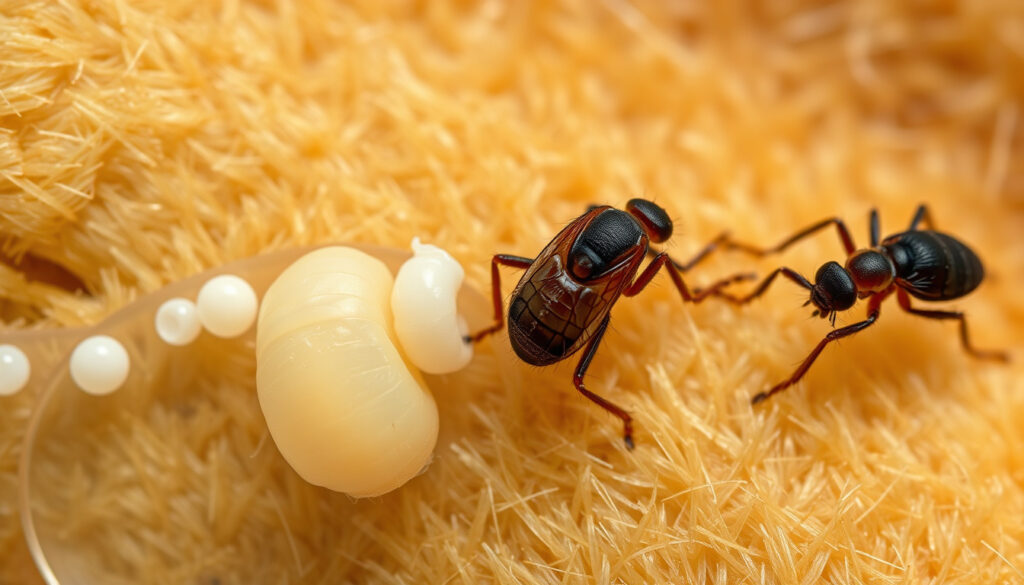
What Do Fleas Look Like? Adults, Eggs, Larvae & Pupae
If you’ve ever spotted a tiny, fast-moving speck on your pet’s fur and wondered whether it was a flea, you’re not alone. Identifying these insects requires knowing what each life stage looks like—and what it’s often confused with. This guide walks through adult fleas, eggs, larvae, and pupae with verified details, so you can spot an infestation before it takes hold.
Adult flea size: 1–4 mm · Adult flea color: brown to reddish-brown · Flea egg size: 0.5 mm, oval and white · Flea larvae size: 2–5 mm, worm-like · Body shape: thin, flat, with large hind legs
Quick snapshot
- Adult fleas reach 1–4 mm in length and are brown to reddish-brown (Gopher Patrol pest experts)
- Flea eggs are roughly the size of a grain of sand and white or off-white in color (Weave pet health resource)
- The complete flea life cycle spans four stages: egg, larva, pupa, and adult (CDC official guidance)
- Maximum jump distance varies by species and source
- Exact pupal stage duration ranges from days to several months depending on conditions
- Eggs hatch in 1–10 days, larvae develop over 5–20 days (CDC official guidance)
- Full life cycle can complete in as little as 3 weeks under optimal conditions (Chewy pet retailer)
- Adult fleas require a blood meal to reproduce and can live 2 weeks to 3 months (Corky’s Pest Control specialists)
- A single female flea can lay up to 40 eggs per day and 600 per month after feeding (Weave pet health resource)
These baseline measurements help you recognize fleas at each stage of their life cycle.
| Feature | Detail |
|---|---|
| Length | 2.5 mm (adults) |
| Color | Brown to reddish-brown |
| Wings | None |
| Body | Thin, flat, hairy |
| Legs | Large hind legs for jumping |
What do household fleas look like?
Household fleas are almost always cat fleas (Ctenocephalides felis), the most common flea species affecting pets in homes worldwide. Understanding their appearance at each stage is key to identifying an infestation early.
Adult fleas
Adult fleas are reddish-brown to black, oval-shaped, wingless insects measuring 1–4 mm in length with powerful hind legs for jumping up to 8 inches. According to pest control experts at Gopher Patrol pest experts, their bodies are thin and flat—shaped specifically to move through host fur without being easily dislodged.
Their bodies are covered in backward-pointing bristles that help them grip fur, and they have specialized piercing mouthparts designed for blood feeding. According to Itch Pet veterinary advisors, these anatomical features make them efficient parasites but also give them a distinctive, almost comblike appearance under magnification.
Flea eggs
Flea eggs are tiny, white, oval-shaped, about the size of a grain of sand, and nearly impossible to see with the naked eye. According to Weave pet health resource, a single female flea can lay up to 40 eggs per day—often hundreds in a short period after a blood meal.
These eggs are laid loosely in the host’s fur and fall off onto carpets, bedding, and cracks in flooring. Their small size and pale color mean they are frequently mistaken for sand, salt, or flakes of dead skin.
Flea larvae
Flea larvae are blind, legless, whitish to translucent, worm-like or maggot-like, 2–5 mm long, with pale hairs, feeding primarily on flea dirt. According to Orkin pest control professionals, larvae have three growth stages called instars, during which they consume organic debris and adult flea feces.
They prefer dark, humid environments like carpet fibers, pet bedding, and floor cracks. Unlike adults, they are rarely seen unless you inspect the environment closely—often appearing as tiny, C-shaped white specks with darker heads.
Flea pupae
Flea pupae are enclosed in sticky silk cocoons that adhere to surfaces like carpet fibers and pet fur, often camouflaged with debris. According to the CDC official guidance, these cocoons protect the developing flea from insecticides, making this stage particularly difficult to eliminate.
Pupal fleas do not feed and remain dormant until they detect a potential host through movement, heat, or carbon dioxide. This explains why infestations can seem to persist even after treatment—adult fleas continue emerging from cocoons days or weeks later.
What bug is mistaken for a flea?
Several small arthropods resemble fleas, and misidentification is common when relying on casual observation alone.
Springtails
Springtails (Collembola) are tiny, jumping insects often found in moist areas like bathrooms, basements, and under leaf litter. They are frequently mistaken for fleas because of their small size and ability to leap. However, springtails have a forked, tail-like appendage called a furcula that they use for jumping—unlike fleas, which use enlarged hind legs.
Their body shape differs significantly: springtails are more rounded and segmented, while fleas have the distinctive flat, oval profile built for moving through fur.
Other lookalikes
Carpet beetles, bedbug nymphs, and even small ticks are sometimes confused with fleas. The key distinguishing factor is movement—fleas jump abruptly and erratically, while most lookalikes crawl or hop less dramatically. Flea dirt (flea feces) is often the clearest sign of a true flea infestation: it appears as black specks like pepper and turns red-brown when wet.
If the insect jumps and you have pets, fleas are the primary suspect. Springtails and carpet beetles require different control approaches, so correct identification matters for effective treatment.
How do I tell if I have fleas?
Spotting fleas or their signs on pets and in the home is often easier once you know where to look and what evidence to recognize.
Signs in bedding and carpet
Flea dirt appears as black specks like pepper scattered on pet bedding, carpets, and upholstery. According to Orkin pest control professionals, this “dirt” is actually adult flea feces—mostly dried blood—and it turns red-brown when moistened, which is a definitive sign of flea activity.
Check pet bedding, favorite resting spots, and carpet near baseboards. Larvae are often hidden in these areas, feeding on flea dirt and organic debris.
Signs on pets
To identify fleas on pets, run a fine-toothed flea comb through the fur over white paper or a light-colored surface. According to Gopher Patrol pest experts, this method lets you see jumping adults or the dark specks of flea dirt falling onto the paper.
Flea bites on pets typically appear as small, red, itchy bumps—often clustered around the neck, groin, and base of the tail. Excessive scratching, licking, or biting at these areas is a behavioral sign that often precedes visual confirmation.
What will kill fleas instantly?
While no treatment eliminates every flea instantly, certain methods achieve rapid knockdown of adult fleas and larvae.
Immediate control options
Heat treatment is one of the fastest ways to kill fleas at all life stages. Washing bedding at 140°F (60°C) or higher, or using a steam cleaner on carpets, destroys fleas, eggs, and larvae effectively.
Diatomaceous earth (food-grade) works by dehydrating fleas on contact. When applied to carpets, pet bedding, and cracks, it provides ongoing control as fleas walk through the powder. Insect growth regulators (IGRs) like pyriproxyfen interrupt the life cycle by preventing larvae from maturing.
Professional and vet solutions
Veterinary-prescribed oral treatments such as fluralaner (Bravecto) or afoxolaner (NexGard) kill adult fleas within hours of application. These products circulate through the pet’s bloodstream—fleas ingest the active ingredient when they bite.
For complete home elimination, pest control professionals often combine residual insecticide sprays with IGRs, targeting both adult fleas and their developmental stages.
The pupal stage is the hardest to kill—cocoons resist insecticides until adults emerge. A complete treatment plan must account for this dormancy period, or reinfestation can occur within weeks.
How long will fleas last in a house?
The duration of a flea infestation depends on temperature, humidity, and whether pets are present to sustain the population.
Lifespan factors
Adult fleas require a blood meal to reproduce and can live 2 weeks to 3 months on a host. According to Corky’s Pest Control specialists, without a host, fleas starve within days or weeks—but pupae can remain dormant for months, waiting for a host to emerge.
Under optimal conditions (warm temperatures and moderate humidity), a full flea life cycle can complete in as little as 3 weeks. According to Chewy pet retailer, this rapid reproduction means a handful of fleas can become thousands within a single season.
Peak flea season
Fleas thrive in temperatures between 70–85°F (21–29°C) with humidity above 50%. In most temperate climates, peak flea season runs from late spring through early fall. However, heated homes allow fleas to persist year-round, making treatment necessary even in winter.
The pattern: untreated flea populations don’t naturally die out—they decline without hosts but explode when one returns. Consistent prevention on pets and environmental treatment are the only reliable defenses.
“An adult flea has very powerful hind legs and can jump incredible distances of up to eight inches in a single bound.”
— Weave, Pet Health Resource
“Adult fleas are approximately 2.5 mm long, dark in color, with three pairs of legs.”
— Orkin Pest Control professionals
Related reading: What Is VO2 Max – Charts, Tests and Training Guide · Herpes Photos in Different Stages – Visual Stages from Prodrome to Healing
petsbest.com, orkin.com, wondercide.com, vetcarebelmont.com, itchpet.com
Adult fleas appear as tiny dark insects about one-eighth inch long, but this size color stages guide details their flattened bodies and color shifts across all stages from eggs to pupae.
Frequently asked questions
What do fleas look like on dogs?
On dogs, adult fleas appear as tiny, dark reddish-brown insects moving quickly through the fur, especially around the neck, groin, and belly. Flea dirt—black specks that turn red-brown when wet—is often more visible than the fleas themselves.
What do fleas look like on cats?
Cats typically harbor cat fleas (Ctenocephalides felis). They appear similar to dog fleas—small, flat, dark brown, and fast-moving. Cats may groom away visible fleas, making flea dirt a more reliable sign on felines.
What do flea bites look like?
Flea bites appear as small, red, raised bumps often clustered in groups of three or more (“breakfast, lunch, dinner” pattern). They are typically itchy and may appear on ankles, feet, and lower legs in humans—areas close to pet resting zones.
What do fleas look like on humans?
Human flea bites from cat or dog fleas usually appear on the lower legs and feet. The fleas themselves are rarely seen on human skin since they prefer furry hosts, but they may briefly land on human skin when searching for a blood meal.
What do fleas look like on clothes?
Fleas on clothing are usually flea dirt that has fallen from an infested pet onto fabric. You may also see fleas briefly if a pet has been resting on the clothing—they appear as tiny, fast-moving dark specks.
What do fleas hate the most in the house?
Fleas avoid direct sunlight, dry conditions, and temperatures below 45°F (7°C). They also dislike certain essential oils (cedar, eucalyptus) and diatomaceous earth, though these are preventive measures rather than guaranteed extermination.
What month are fleas the worst?
In most regions, fleas are most active from late spring through early fall (May to September in the Northern Hemisphere). However, heated indoor environments allow fleas to persist year-round, making monthly prevention recommended regardless of season.
More related posts
 Carpal Tunnel Syndrome Treatments: From Home Care to Surgery
 Spiderman Beyond the Spider Verse – What Fans Need to Know
 Capital of Northern Ireland: Belfast Facts, History & UK Role
 Four Seasons Hotel London: Park Lane vs Tower Bridge Guide
 Liverpool FC vs Sunderland AFC Standings: Head-to-Head History
 Harriet Kemsley: Dyspraxia, PCOS, Divorce & Career
 Michelle Williams Movies and TV Shows: The Full List
 Cillit Bang Black Mould Remover – Reviews, Instructions & Safety Guide