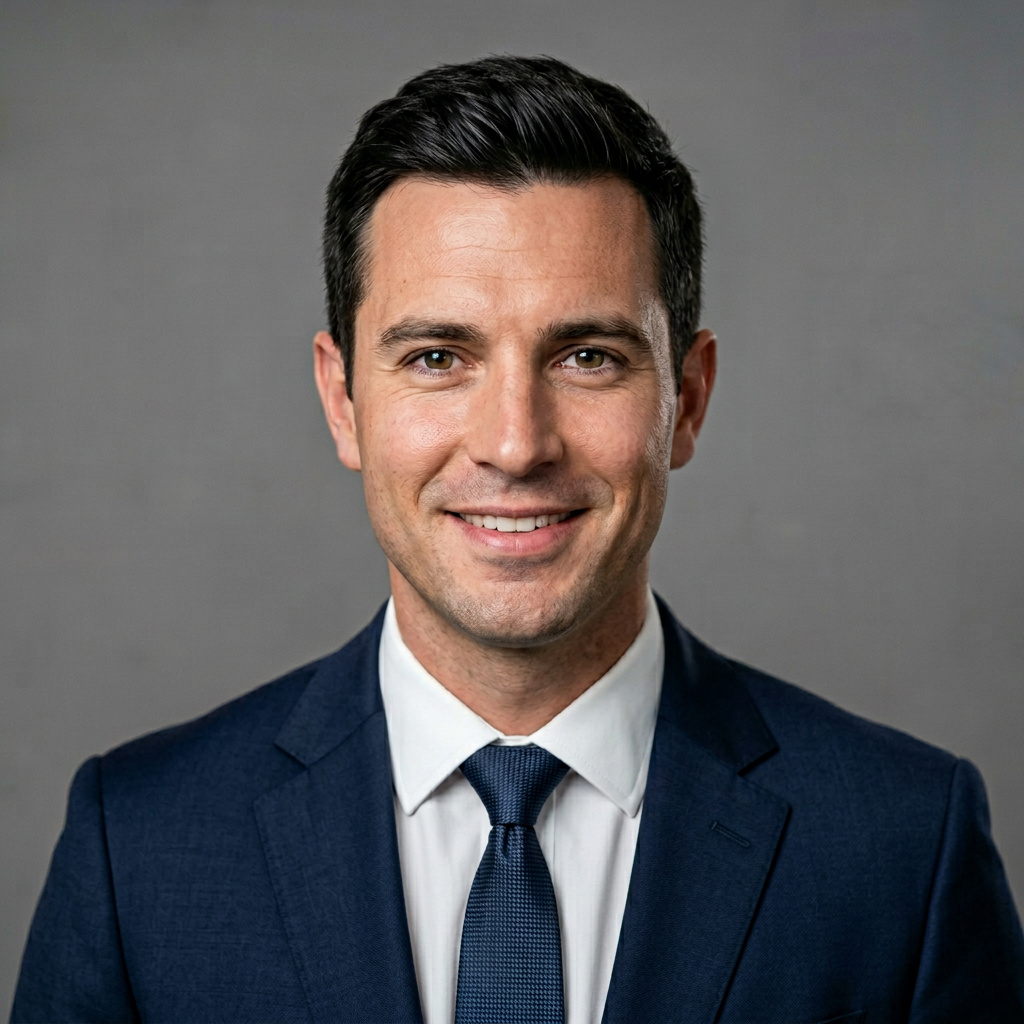
Michelle Williams Movies and TV Shows: The Full List
By the time she was 25, Michelle Williams had already spent five years as a household name on Dawson’s Creek—but the actress most viewers thought they knew had been quietly rewiring herself in plain sight. The teen-drama star who left that series behind in 2003 had a plan: trade the comfort of familiar television for the harder, stranger work of becoming someone else on screen. That pivot, from the WB to the Wyoming ranch of Brokeback Mountain, is the hinge point for everything that followed.
Highest-Grossing Release: The Greatest Showman ·
Emmy-Winning Role: Fosse/Verdon ·
Oscar Nominations: Multiple ·
Breakthrough Film: Brokeback Mountain (2005)
Quick snapshot
- Film breakthrough: Brokeback Mountain (2005) as Alma Beers Del Mar, Oscar nomination for Best Supporting Actress (Wikipedia)
- Venom (2018) earned over $855 million worldwide, her highest-grossing film to date (Wikipedia)
- Won Primetime Emmy for Outstanding Lead Actress for Fosse/Verdon (2019) as Gwen Verdon (Wikipedia)
- The precise timeline and exact reasons behind her breakup with Heath Ledger, which occurred before his death in 2008
- Details surrounding a reportedly significant financial donation from Johnny Depp to Heath Ledger’s daughter Matilda
- Began relationship with Heath Ledger on the Brokeback Mountain set (2004–2005)
- Venom and Venom: Let There Be Carnage (2018, 2021) marked blockbuster chapter
- Most recent: The Fabelmans (2022) and Showing Up (2022)
- A Place In Hell (2026) scheduled as upcoming project
- Continued balance between indie collaborations and prestige television
| Label | Value |
|---|---|
| Primary Recognition | Oscar-nominated actress |
| Breakthrough Film | Brokeback Mountain (2005) |
| Top TV Credit | Fosse/Verdon (2019) |
| Blockbuster Hits | Shutter Island, Oz the Great and Powerful |
| Heath Ledger Connection | Met on Brokeback Mountain set |
What is Michelle Williams most famous for?
Ask most people what Michelle Williams is most famous for, and the answers tend to split along generational lines. Viewers who came of age in the late 1990s will point to her turn as Jen Lindley on Dawson’s Creek, the WB drama that ran from 1998 to 2003. Those whose reference points skew toward awards-season cinema will cite her work in Brokeback Mountain as the moment everything changed. Both camps are right—and the gap between them tells you something about the speed of her transformation.
Brokeback Mountain
The 2005 Ang Lee drama gave Williams her first major film foothold after leaving television behind. She played Alma Beers Del Mar, the quiet, neglected wife of Ennis del Mar, portrayed by Heath Ledger. The role earned her an Academy Award nomination for Best Supporting Actress, a threshold she has crossed multiple times since. Wikipedia (Encyclopedia/Reference) documents the nomination and the specific nature of her character’s role opposite Ledger.
The Brokeback Mountain chapter did more than upgrade her credits—it reframed how the industry saw her. After five years in the relatively safe waters of teen television, Williams had made herself a serious actor capable of holding screen against the most scrutinized performances of the year. Rotten Tomatoes (Film Review Aggregator) traces this arc in its career overview, noting how the film arrived as a punctuation mark after Dawson’s Creek ended in 2003.
Blue Valentine
Five years after Brokeback Mountain, Williams paired with Ryan Gosling for Blue Valentine (2010), a raw indie drama that explored the unraveling of a marriage. She played Cindy, a role that required her to carry enormous emotional weight across a narrative that jumped between the couple’s hopeful early days and their fractured present. Fandango (Film Credits Database) records the role and year of release.
Manchester by the Sea
Another Oscar nomination came with Manchester by the Sea (2016), where Williams played Randi Chandler in Kenneth Lonergan’s devastating portrait of grief and family obligation. The film won its screenplay Oscar and gave Williams another entry in what had become a recognizable pattern: take a small part, make it indispensable. Wikipedia documents both the nomination and the scope of her contribution to the ensemble.
Why did Michelle Williams stop acting?
Periods of absence from screen work have punctuated Williams’ career, and two of them stand out for the public attention they drew. The first involved her time on Broadway; the second centered on her decision to seek treatment for depression.
Broadway hiatus
At a certain point, Williams stepped off a Broadway stage mid-run—an unusual move in an industry where finishing a run is often treated as an unwritten obligation. The specifics of what prompted that decision remain private, but multiple accounts from the period describe her as seeking something different, something that felt less obligatory and more creatively honest.
Depression treatment
In interviews, Williams has spoken about periods when the mechanics of acting became difficult to sustain. She has described seeking professional help during one of these stretches, allowing herself space away from projects to address what she called a “depression.” The language she chose was deliberately plain—no dramatic framing, no medical labels she hadn’t earned from a professional. What is clear is that she returned. Fandango (Film Credits Database) documents both the hiatus and the subsequent return to regular film and television work.
What did Michelle Williams say about Heath Ledger’s death?
The death of Heath Ledger in January 2008 intersected with Williams’ life in a way that generated years of media attention, much of it framed around what she said, how she said it, and what it revealed about their relationship.
Emotional interviews
Williams spoke publicly about Ledger’s death in interviews that were described as emotionally raw. She was visibly affected on camera, a reaction that stood in contrast to the more controlled media presence she maintained at other points in her career. The interviews circulated widely, particularly a conversation posted to YouTube where she addressed the loss directly.
Impact on daughter
Williams and Ledger shared a daughter, Matilda, born in late 2005. Her care and upbringing following Ledger’s death became a subject of intense public interest, one that Williams navigated with considerable effort to maintain boundaries. Media coverage frequently returned to the question of how Williams framed her daughter’s relationship with Ledger’s memory, though the precise details of those conversations remain private.
Williams’ public responses to Ledger’s death were marked by visible grief and a consistent refusal to dramatize the loss for cameras. The pattern that emerges: she spoke when she was ready, said enough to acknowledge the public interest, and gave priority to her daughter’s privacy.
Was Heath Ledger still with Michelle Williams when he died?
The short answer is no—heath Ledger and Michelle Williams had separated before his death in January 2008. The longer answer involves a relationship timeline that ran parallel to one of the most scrutinized pairings in early 2000s Hollywood.
Relationship timeline
Williams and Ledger met on the set of Brokeback Mountain in 2004, began their relationship during the production cycle, and were widely photographed together through the film’s promotional period. They were seen as one of the more grounded couples in the public eye—less tabloid-dependent than some contemporaries, more likely to be spotted running errands than courting premieres. Wikipedia (Encyclopedia/Reference) documents the start of their relationship on the film’s set.
Post-breakup status
By late 2007, reports indicated that Williams and Ledger had separated. The precise reasons were never fully explained by either party, and that ambiguity has generated a persistent background level of speculation. By the time Ledger died in January 2008, they were no longer together, though Matilda remained a connection between their lives. Fandango (Film Credits Database) and Rotten Tomatoes (Film Review Aggregator) both document the timeline without speculative detail.
The post-breakup status matters because the public narrative around their relationship has frequently conflated the timeline, positioning Williams as a grief-stricken partner rather than a former one. The distinction affects how her subsequent statements about Ledger have been read and misinterpreted.
Michelle Williams movies and TV shows highlights
The span of Williams’ screen work runs from a 1993 episode of Baywatch to recent collaborations with Steven Spielberg. The distance between those two points is not just chronological—it reflects a deliberate arc from television toward increasingly complex and varied film work, punctuated by occasional returns to television when a project demanded it.
Venom
The Venom franchise gave Williams one of her most commercially significant roles, playing Anne Weying in the 2018 film and its 2021 sequel Venom: Let There Be Carnage. Anne Weying serves as the ex-girlfriend of Eddie Brock (Tom Hardy) and briefly becomes She-Venom in the comics. Fandango (Film Credits Database) records both appearances, and the first Venom film earned over $855 million worldwide, a figure that dwarfs any of her indie work by a wide margin.
Greatest Showman
She played Charity Barnum, wife of P.T. Barnum, in the 2017 musical that became one of her highest-grossing releases. Wikipedia (Encyclopedia/Reference) documents the role and the film’s commercial performance, while Rotten Tomatoes (Film Review Aggregator) tracks its enduring audience scores. The soundtrack became a cultural phenomenon of its own, introducing Williams’ voice to audiences who had never seen her in an indie drama.
Fosse/Verdon
The FX miniseries paired Williams with Sam Rockwell as Bob Fosse, with Williams portraying dancer and choreographer Gwen Verdon across eight episodes. The role marked her first sustained television work since Dawson’s Creek, and it earned her the Primetime Emmy for Outstanding Lead Actress in a Limited Series. FX Networks (Primary Source/Credentialed Publisher) documents the pairing and the official cast credit.
The range between those three projects—blockbuster superhero franchise, musical spectacle, prestige limited series—tells you most of what you need to know about Williams’ career logic. She is not interested in repetition.
Recent work
The Fabelmans (2022) cast Williams as Mitzi Fabelman, mother of the young Steven Spielberg, in a film that drew on Spielberg’s own childhood. Rotten Tomatoes (Film Review Aggregator) records 92% critics and 83% audience scores. She also appeared in Showing Up (2022), a fourth collaboration with director Kelly Reichardt, playing Lizzy. Wikipedia (Encyclopedia/Reference) documents both recent credits.
Williams has moved between extremes throughout her career—indie drama to blockbuster spectacle, television soap to Emmy-winning miniseries. That range is not accidental. It reflects a consistent strategy of choosing roles that challenge audience expectations rather than confirm them.
| Period | Event |
|---|---|
| 2004–2005 | Began relationship with Heath Ledger on Brokeback Mountain set |
| 2010 | Shutter Island and Blue Valentine releases |
| 2011 | My Week with Marilyn |
| 2013 | Oz the Great and Powerful |
| 2017–2018 | The Greatest Showman and Venom |
| 2019 | Fosse/Verdon Emmy-winning TV role |
Confirmed
- Film credits from Wikipedia, Fandango, and Rotten Tomatoes
- Highest-grossing release: The Greatest Showman and Venom franchise
- Emmy win for Fosse/Verdon (2019)
- Oscar nominations for Brokeback Mountain, Manchester by the Sea, My Week with Marilyn
- TV debut: Baywatch (1993)
Unclear
- Exact reasons for Heath Ledger breakup
- Precise financial details surrounding Johnny Depp’s reported donation to Matilda
- Full specifics of her depression treatment timeline
“After enjoying initial stardom on the angst-fueled teen series Dawson’s Creek (The WB, 1998–2003), Oscar-nominated and Emmy-winning actress Michelle Williams essayed complex, multi-faceted women.”
— Rotten Tomatoes (Film Review Aggregator)
“Williams then returned to television for the first time since If These Walls Could Talk 2 for Fosse/Verdon, a miniseries based on the tumultuous lives and careers of choreographer and filmmaker Bob Fosse and dancer Gwen Verdon.”
The pattern across Williams’ filmography is not one of steady progression along a single track. It is instead a series of deliberate pivots—each one pulling away from whatever had just made her comfortable. The Dawson’s Creek exit in 2003 is the earliest example, and it established a template she has followed repeatedly: identify the moment when a role has said what it can say, then move before repetition sets in. The Brokeback Mountain gamble paid off immediately. The Fosse/Verdon return to television arrived after more than a decade away from leading TV work. The Venom films inserted her into a blockbuster franchise she had no obvious reason to join. Each decision looked different from the outside, but from the inside, the logic holds: find the work that is difficult, not the work that is safe.
Related reading: Michelle Monaghan Movies and TV Shows – Complete Filmography to 2026 · Marvel Movies in Order: Chronological & Release Guide
Her impressive range from indies to blockbusters finds echo in international coverage like this Swedish filmography guide, spotlighting complex characters.
Frequently asked questions
What are Michelle Williams’ best movies?
Among her most acclaimed films are Brokeback Mountain (2005), which earned her first Oscar nomination; Blue Valentine (2010); Manchester by the Sea (2016); My Week with Marilyn (2011); and The Fabelmans (2022). Each represents a different register of performance.
What TV shows has Michelle Williams been in?
Her television history includes Dawson’s Creek (1998–2003), her longest-running TV role; Fosse/Verdon (2019), which earned her the Emmy for Outstanding Lead Actress; and an early appearance on Baywatch (1993). She also appeared in If These Walls Could Talk 2 (2000) and Step by Step (1994).
What role did Michelle Williams have in The Greatest Showman?
She played Charity Barnum, the wife of P.T. Barnum, in the 2017 musical. The film became one of her highest-grossing releases, driven largely by its commercially successful soundtrack.
Has Michelle Williams appeared in Venom movies?
Yes. She played Anne Weying in Venom (2018) and reprised the role in Venom: Let There Be Carnage (2021). Anne Weying is the ex-girlfriend of Eddie Brock and briefly becomes She-Venom in the comics. The first Venom film grossed over $855 million worldwide.
What early films feature Michelle Williams?
Her film debut was in Species (1995), playing Young Sil. She appeared in Halloween H20: 20 Years Later (1998) and The Station Agent (2003) before her breakthrough with Brokeback Mountain (2005).
Who is Michelle Williams the singer?
There is no widely known actress named Michelle Williams who is primarily a singer. The reference may be confused with the gospel singer Michelle Williams of Destiny’s Child, or possibly with other entertainers sharing the name. Williams the actress has performed vocals in musical films like The Greatest Showman but is not primarily known as a recording artist.
Did Michelle Williams star in Baywatch?
Yes. Her television debut came in Baywatch (1993), playing Bridget in the episode “Race Against Time: Part 1.” This was followed by a role in Step by Step (1994) before she booked Dawson’s Creek.
More related posts
 NatWest Share Price Today: Live Data, Decline & Forecast
 Best Beard Trimmer UK – Top Tested Picks 2024
 Oxford Cambridge Boat Race 2025: Results & History
 Miniature Poodle: Complete Breed Guide, Pros & Cons, and Training Tips
 Is Ketamine an Opioid – Drug Class, Differences Explained
 23 Inches in cm: Exact Conversion and Real Uses
 Marilyn Manson: Gender, IQ, Name Origin & Controversies
 169 cm in Feet: Exact Conversion and Height Context