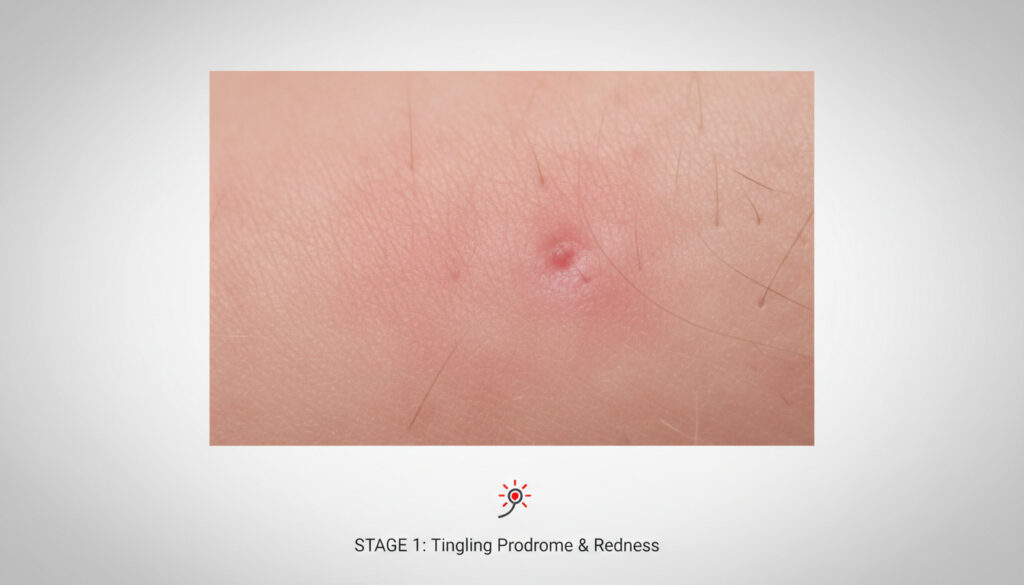
Herpes Photos in Different Stages – Visual Stages from Prodrome to Healing
Herpes simplex virus infections, whether caused by HSV-1 (primarily oral) or HSV-2 (primarily genital), follow a predictable visual progression through five distinct stages. Medical photography documents this progression from initial skin changes to complete healing, typically spanning 7 to 14 days depending on outbreak severity, anatomical location, and whether it is a primary or recurrent infection.
Understanding the visual markers of each stage—prodrome, blister formation, ulceration, crusting, and healing—helps distinguish herpes from other dermatological conditions. Accurate identification matters because contagiousness peaks during specific phases, and early recognition allows for prompt antiviral treatment that can shorten duration. Those seeking Translation English to Urdu – Best Free Tools and Apps 2025 can find resources separately.
This guide presents medically documented descriptions of herpes photos across all stages, drawing from clinical sources to illustrate how HSV-1 cold sores and HSV-2 genital lesions evolve visually. Tämä opas esittelee kliinisistä lähteistä peräisin olevia lääketieteellisesti dokumentoituja kuvauksia herpesin valokuvista kaikissa vaiheissa, havainnollistaen kuinka HSV-1-huuliherpes ja HSV-2-sukupuolielinten leesiot kehittyvät visuaalisesti, ja voit lukea lisää topikaalisten steroidien vieroitus oireet täältä. Topikaalisten steroidien vieroitus oireet
What Do Herpes Sores Look Like in Different Stages?
| Prodrome | Blisters/Vesicles | Ulcers | Healing/Crusting |
|---|---|---|---|
| Subtle redness, tingling, minor swelling; no visible blisters yet. Lasts 1-2 days. | Clustered, fluid-filled sacs on red base; clear/yellowish fluid; highly contagious. | Open, shallow sores after blisters rupture; raw, painful; merge into larger lesions. | Yellow-brown crusts form over drying ulcers; scabs protect new skin formation. |
- HSV-1 typically affects lips and mouth margins, while HSV-2 predominantly targets genital areas, though either virus can infect either location.
- Prodrome symptoms—tingling, itching, burning—often begin hours to days before any visible blister appears, serving as the only early warning sign.
- Blister clusters represent the most contagious stage, with thin-walled vesicles containing infectious viral fluid.
- Ulceration causes the most intense discomfort, often rated 7/10 pain severity, and poses the highest transmission risk.
- Crusting only occurs in dry areas like lips; genital or oral mucosa healing skips this phase due to moisture.
- Total outbreak duration ranges from 7 to 14 days for recurrences, with primary outbreaks lasting 10-21 days.
- Recurrent outbreaks typically present milder symptoms and shorter durations than initial infections.
| Stage | Appearance | Duration | Contagiousness | HSV-1 vs HSV-2 Notes |
|---|---|---|---|---|
| Prodrome | Redness, tingling, mild swelling; no blisters | 1-2 days | Low to moderate | Similar for both; early warning phase |
| Blister Formation | Clustered fluid-filled vesicles on red base | 1-3 days | High | HSV-1: lips/nose; HSV-2: genitals, wider spread initially |
| Ulceration | Open, shallow sores; raw, painful; oozing fluid | 1-3 days | Very high | Genital HSV-2 ulcers often larger in primary outbreaks |
| Crusting | Yellow/brown scabs over drying lesions | 3-7 days | Decreasing | Only in dry areas; moist areas skip this phase due to moisture. |
More related posts
 Pay to Drive in London: Congestion Charge & ULEZ Guide
 Lord Byron: Biography, Works, Disability & Scandal Explained
 What Is a Lifetime ISA? Bonus, Penalties & Rules Explained
 Snooker Today on TV: UK Schedule, Start Time & Channel
 1 British Pound to Indian Rupee: £1 in INR Rate
 Samsung Galaxy Watch Active – Specs, Battery and 2024 Review
 What Is a Gene? Simple Definition, vs DNA, Human Count
 Marilyn Manson: Gender, IQ, Name Origin & Controversies