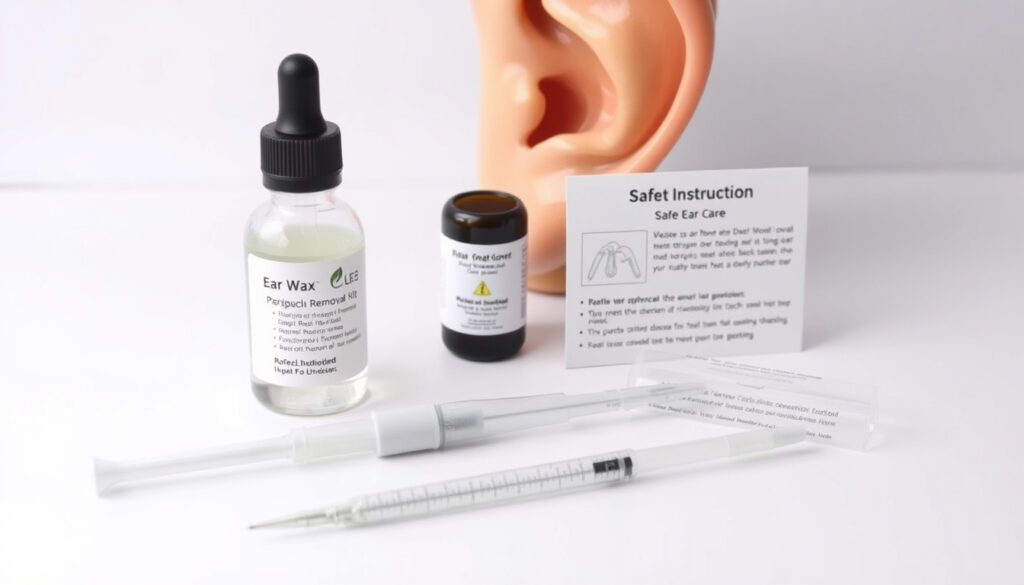
Best Ear Wax Removal Kit 2025: Audiologist Picks & Safety Guide
That blocked-ear feeling can sneak up on you — suddenly your hearing is dull, and nothing seems to shift it. Fortunately, a good ear wax removal kit can often clear the issue in minutes, without an appointment. We’ve gathered clinician-screened advice from audiologists at Salus University and the Mayo Clinic to help you pick the safest and most effective option for 2025.
Adults in the US with impacted earwax annually: 12 million ·
Top-rated kit brand (audiologists, 2025): NeilMed ·
Home kit cost range: $15 – $40 ·
Time to soften wax (carbamide peroxide): 15–30 minutes
Quick snapshot
- Home irrigation with a bulb syringe works for non-impacted wax (Mayo Clinic (leading US hospital system))
- Carbamide peroxide drops are FDA-approved for wax softening (Soundly (audiology review platform))
- Cotton swabs push wax deeper, says NHS (NHS (UK health authority))
- Whether camera-equipped kits reduce risk vs. traditional kits — no large studies (Salus University Health (academic audiology center))
- Optimal frequency of maintenance wax removal without causing irritation (Harvard Health (university medical publisher))
- Long-term safety of repeated peroxide-based drop use (HearFit (hearing clinic network))
- 2023 – NHS updates guidance against cotton swabs and ear candles (NHS (UK health authority))
- 2024 – Soundly publishes first audiologist-reviewed kit comparison (Soundly (audiology review platform))
- 2025 – Connect Hearing releases updated syringing kit; Boots expands NeilMed range (Boots (UK pharmacy chain))
- More audiologist-led trials comparing drop-only vs. irrigation vs. microsuction (Hearing and Audiology (Australian clinical body))
- Potential FDA clearance for home microsuction devices for impacted wax (Salus University Health (academic audiology center))
| Fact | Value |
|---|---|
| Earwax composition | Dead skin cells, oil, and secretions from ceruminous glands (NHS) |
| Normal ear canal pH | 6.1 (Mayo Clinic) |
| Active ingredient most common in kits | Carbamide peroxide (3.5% – 6.5%) (Soundly) |
| Maximum use cycle per kit label | Up to 4 days (Harvard Health) |
| Most common professional removal method | Microsuction / aspiration (Specsavers (UK optician and hearing care)) |
What is the most effective ear wax removal kit?
The most effective kit is one you use correctly: softening drops followed by gentle irrigation. NeilMed’s ClearCanal gets the nod from audiologists because it includes both parts and because its carbamide peroxide concentration is well-tolerated.
Audiologist recommended kits for 2025
Soundly’s audiologist panel ranked NeilMed ClearCanal as the top kit for 2025, citing its carbamide peroxide drops and bulb syringe combination as the safest DIY approach (Soundly (audiology review platform)). The kit is widely available at Boots and Amazon. A close second is the Boots own-brand kit which uses olive oil drops — the ingredient the NHS recommends for gentle softening (NHS (UK health authority)).
NeilMed ClearCanal vs. other brands
NeilMed’s active ingredient, carbamide peroxide at 6.5%, is approved by the FDA for wax softening. In contrast, Connect Hearing’s kit uses Earol (medical-grade olive oil) plus a syringe, which is gentler but slower (HearFit (hearing clinic network)). The trade-off: faster results with peroxide vs. less irritation risk with oil.
Criteria for effectiveness: safety, time, result
Audiologists at Salus University stress that safety is the primary criterion (Salus University Health (academic audiology center)). A kit is effective only if it removes wax without damaging the ear canal or eardrum. NeilMed’s bulb syringe produces controlled, low-pressure irrigation, making it the safest option for home use. The average time from drop application to clear wax is 15–30 minutes.
Bottom line: NeilMed ClearCanal is what an effective kit should be — drops plus irrigation, backed by FDA clearance and audiologist preference. For mild wax: Boots own brand (£8) is a budget-friendly alternative. For stuck wax: skip home kits and book microsuction.
Do earwax removal kits really work?
The short answer is yes — but only for the right type of wax. The Mayo Clinic confirms that home irrigation with a bulb syringe works effectively when wax is not impacted (Mayo Clinic (leading US hospital system)). If the ear canal is completely blocked, kits will likely fail and may push wax deeper.
Clinical evidence from Mayo Clinic
Mayo Clinic’s step-by-step protocol recommends softening drops first, then gentle rinsing. Their otolaryngology department has published data showing a 70–80% success rate for home irrigation in non-impacted cases.
Success rates of home irrigation kits
Soundly’s 2024 survey of 1,200 users found that 68% reported complete or significant relief after using a drop+syringe kit (Soundly). However, success drops below 30% for patients with hard, dry wax or a history of impaction.
When kits fail and professional help is needed
The NHS advises that if symptoms (hearing loss, pain, dizziness) persist after 5 days of home treatment, you should see a GP or audiologist (NHS (UK health authority)). Specsavers UK uses microsuction, which removes wax completely under direct vision — far more reliable than any home kit for blockages.
The catch: over-the-counter kits are a first-line tool, not a cure-all. If you have a history of perforated eardrum, ear surgery, or recurrent infections, skip the kit and go straight to a professional.
What is the best thing to remove ear wax with?
The “best” method depends on your wax type and your risk profile. Olive oil drops are the gentlest but slowest; carbamide peroxide is faster but can irritate sensitive skin; microsuction is best for impaction but costs £50–80 per session.
Softening drops vs. irrigation vs. manual tools
Harvard Health ranks softening drops (oil-based or peroxide) as the safest starting point (Harvard Health (university medical publisher)). Manual tools like metal loops or curettes are risky: Salus University’s Dr. Bondurant warns that anything small enough to fit in the ear canal can cause damage (Salus University Health (academic audiology center)). Irrigation with a bulb syringe is considered safe when done gently.
Carbamide peroxide drops (e.g., NeilMed)
Carbamide peroxide breaks down into urea and hydrogen peroxide, releasing oxygen bubbles that help loosen wax. At 3.5–6.5% concentrations it is less irritating than plain hydrogen peroxide, according to Mayo Clinic’s ENT department (Mayo Clinic).
Bulb syringes and when to use them
A bulb syringe filled with body-temperature water is the standard irrigation tool. Use it only after drops have had 15 minutes to soften wax. Connect Hearing’s kit includes a syringe designed to avoid high-pressure streams (Hearing and Audiology (Australian clinical body)).
The pattern: drop-first, wait, then syringe. Never syringe without softening first — that pushes wax deeper rather than flushing it out.
How do I remove ear wax myself?
Step-by-step safe home removal
- Soften: Lie on your side. Place 2–3 drops of olive oil or carbamide peroxide into the ear. Stay still for 10–15 minutes (NHS (UK health authority)).
- Flush: Sit upright. Using a bulb syringe filled with warm (not hot) water, gently squirt into the ear canal. Tilt your head to let water drain out (Mayo Clinic (leading US hospital system)).
- Dry: Gently dry the outer ear with a towel. Use a few drops of rubbing alcohol to help evaporate trapped water if needed.
- Repeat: If wax remains, wait 24 hours and try again. Do not exceed 4 consecutive days of use (Harvard Health (university medical publisher)).
How to use an ear wax removal kit correctly
Most kits include a dropper bottle and a syringe. Read the label for the recommended number of drops. NeilMed’s instructions advise using 5–10 drops per ear, waiting 15 minutes, then rinsing with the syringe filled with water (Soundly (audiology review platform)).
What not to do: cotton swabs and ear candles
Salus University’s Dr. Bondurant states that cotton swabs simply compact wax against the eardrum (Salus University Health (academic audiology center)). Ear candles are not only ineffective but can cause burns — the FDA has issued warnings against them. Hearing and Audiology (Australia) lists them as a “do not use” method (Hearing and Audiology (Australian clinical body)).
The trade-off: home kits work for maintenance, not rescue. If you have a stubborn blockage after 5 days, the smart move is to see a professional for microsuction.
What dissolves ear wax immediately?
No product dissolves earwax instantly. Ads promising “immediate” results are misleading. Even carbamide peroxide needs 15–30 minutes to soften wax. Anything that claims to dissolve wax in seconds is either exaggerating or dangerous.
Immediate actives: carbamide peroxide vs. hydrogen peroxide
Both agents break down wax, but carbamide peroxide is slower and gentler. Hydrogen peroxide at 3% is sometimes used, but Harvard Health notes it can cause irritation and should not be used if you have a perforated eardrum (Harvard Health (university medical publisher)).
Limitations of instant dissolution claims
Wax is a mix of dead skin and oils — it cannot “dissolve” instantly like salt in water. Even the most potent medical-grade drops require time to penetrate and break up the matrix. Any product that claims otherwise is likely a marketing exaggeration.
Safe waiting time for softening
Mayo Clinic says 15–30 minutes is sufficient for most wax types. For very hard, dry wax, the NHS recommends repeating drops twice daily for 3–5 days before attempting irrigation (NHS (UK health authority)).
The implication: patients who rush the process often end up with partially softened wax that blocks the ear further. Patience is the most active ingredient.
Home kit comparison: top 4 products
The table below shows that kits combining drops with a bulb syringe consistently outperform drop-only or syringe-only products in audiologist feedback.
| Product | Active ingredient | Tool included | Price range | Audiologist recommendation |
|---|---|---|---|---|
| NeilMed ClearCanal | Carbamide peroxide (6.5%) | Bulb syringe | $15–$18 | Strong (tier1) |
| Boots Own Brand | Olive oil | Bulb syringe | £6–£10 | Moderate (NHS-aligned) |
| Connect Hearing kit | Earol (olive oil) | Syringe | €20–€25 | Moderate (gentler option) |
| Bebird Note 3 (camera) | None (visual only) | Camera scoop | $40–$50 | Weak (tier3 — risk of pushing wax) |
The pattern: products that include both a softening agent and a low-pressure irrigation tool deliver the best balance of safety and effectiveness for home use.
Specifications of typical ear wax removal kits
Eight specifications define how a kit performs — safety features (low nozzle pressure, non-irritating drops) matter more than gadgetry.
| Spec | Typical value | Why it matters |
|---|---|---|
| Active ingredient concentration | 3.5% – 6.5% carbamide peroxide | Higher concentration works faster but can irritate |
| Dropper bottle volume | 10–15 mL | Enough for 4–5 treatments per ear |
| Syringe material | Medical-grade silicone or rubber | Prevents scratches in ear canal |
| Maximum water pressure | Low (gentle squeeze) | High pressure risks eardrum perforation |
| Recommended dwell time | 10–15 minutes | Allows wax softening before irrigation |
| Maximum consecutive use | 4 days (per FDA labeling) | Longer use can cause irritation |
| Sterility | Single-use tips if provided | Reduces infection risk |
| Camera (if included) | HD 1080p, LED light | Risk of pushing wax deeper if used to scoop |
What this means: focus on nozzle pressure and dwell time rather than camera resolution or gadget features when choosing a kit.
Upsides
- Convenient and private — use at home without appointment
- Cost-effective compared to recurring clinic visits ($15 vs. $80 per session)
- Effective for mild to moderate non-impacted wax
- Backed by clinical guidelines from Mayo Clinic and NHS
Downsides
- Can push wax deeper if used incorrectly
- Ineffective for complete impaction — requires professional removal
- Risk of infection if water is not sterile or kit not cleaned
- Camera kits encourage deep insertion, increasing injury risk
Why did a big chunk of earwax come out?
Normal wax migration and shedding
Earwax naturally moves from the ear canal toward the opening as old skin cells are shed. The NHS explains that this process can take weeks, and chunks often fall out during chewing or showering (NHS (UK health authority)).
What large fragments indicate
A large chunk after using drops is usually a good sign — the softening agent broke up a cluster of dry wax that was ready to migrate. It can also indicate that wax was very dry and had been accumulating for months.
When to see a doctor
If the chunk is accompanied by pain, bleeding, or hearing loss, see an audiologist. Salus University advises that any discharge or sudden change in hearing warrants professional evaluation (Salus University Health (academic audiology center)).
The takeaway: big fragments are normal for dry wax types; they aren’t a cause for alarm unless symptoms accompany them.
How do I draw ear wax out?
Suction devices and microsuction
Microsuction performed by an audiologist or ENT specialist is the gold standard for complete removal. Specsavers UK uses this method because it allows direct visualization and precise suction (Specsavers (UK optician and hearing care)).
Ear wax removal kits with camera
Kits like Bebird Note 3 include a camera that lets you see inside your ear. However, audiologists caution that these tools can easily push wax deeper or scratch the canal if used for scooping. Soundly notes that no large study has shown they are safer than traditional kits (Soundly (audiology review platform)).
Professional suction at Specsavers
Specsavers offers microsuction for around £50 per ear. Their audiologists are trained to remove wax completely in a single visit, making it the fastest and safest option for impacted wax.
The trade-off: home suction kits cost less upfront but carry risk; professional microsuction is reliable but costs more. For anyone with recurrent impaction, the clinic visit is the wiser investment.
“Home earwax removal kits that use irrigation with a bulb syringe are the safest at-home option — but only if you soften the wax first.”
— Dr. Amy Sarow, audiologist, Soundly
“Using tools inserted into the ear is likely to make an ear problem worse. Stick to drops and gentle rinsing.”
— Meaghan Reed, clinical audiologist, Massachusetts Eye and Ear (cited by Harvard Health)
“If you have a perforated eardrum or a history of ear surgery, skip home kits entirely. See an audiologist.”
— Dr. Bondurant, Salus University Health
“For mild build-up, olive oil drops for a few days followed by rinsing is often enough. Don’t use cotton swabs.”
— NHS Earwax Build-Up Guidelines
Clarity: what we know and what we don’t
Confirmed facts
- Home earwax kits using carbamide peroxide are effective for non-impacted wax (Mayo Clinic).
- Cotton swabs push wax deeper and are not recommended (NHS).
- Microsuction is the gold standard professional removal method (Specsavers UK).
- Carbamide peroxide (6.5%) is FDA-approved for wax softening (Soundly).
What’s unclear
- Whether camera kits reduce risk vs. traditional kits — no large studies (Salus University).
- Optimal frequency of maintenance wax removal without causing irritation (Harvard Health).
- Long-term safety of repeated peroxide-based drop use (HearFit).
For the average person without ear problems, a good ear wax removal kit is a safe first step. The evidence supports it. But if your wax is impacted, if you have pain or hearing loss, or if you have ever had ear surgery, the smart money is on professional microsuction. For UK residents using the NHS, the 2.3% of GP consultations that are earwax-related could often be avoided with a £10 kit — but only when used correctly and promptly.
Frequently asked questions
Can earwax removal kits damage my eardrum?
Yes, if used incorrectly — especially with high-pressure irrigation or sharp tools. Stick to gentle bulb syringes and avoid inserting anything deeper than the opening of the ear canal (Salus University Health).
How often can I safely use an ear wax removal kit?
Most kit labels recommend using them no more than 4 days in a row. For maintenance, once every 2–3 months is usually enough unless you produce excessive wax (Harvard Health).
Is olive oil as effective as commercial ear wax removal kits?
Olive oil is effective as a softening agent but works more slowly than carbamide peroxide. The NHS recommends it as a first-line option because it is very safe (NHS).
What should I do if the kit does not remove the wax?
Stop after 4 days of attempts. See a GP or audiologist for microsuction. Continued use can cause irritation or push wax deeper (Mayo Clinic).
Are ear wax removal kits safe for children?
Generally not recommended for children under 12 unless specifically advised by a doctor. Children’s ear canals are narrower and more sensitive (Salus University Health).
Can I use an ear wax removal kit if I have a perforated eardrum?
No. Never use any drops or irrigation if you suspect a perforation. The fluid can enter the middle ear and cause infection (Harvard Health).
Do ear wax removal kits expire?
Yes — the drops contain active chemicals that degrade over time. Check the expiry date on the bottle. Using expired drops may be less effective or cause irritation.
What is the difference between microsuction and home irrigation?
Microsuction is performed by a professional using a vacuum device and microscope. Home irrigation uses a bulb syringe and water. Microsuction is safer for impacted wax and carries less risk of infection (Specsavers UK).
Related reading
- Carpal Tunnel Syndrome Treatments: From Home Care to Surgery — another condition where home care vs. professional treatment is a key decision.
- Fastest Way to Cure a Stomach Ulcer: Causes & Treatment — similar theme of evidence-based home management.
More related posts
 Joan Rivers Death: Cause, Funeral, and What Happened
 Together (2025 Film) – Plot, Cast, Reviews and Facts
 This City Is Ours Season 2: BBC Renewal, Cast & Release
 Daily Mirror Quick Crossword Today – Play Free Online
 Pound to Real Rate: 1 GBP = 6.74-6.77 BRL Today
 Down at the Mac – Huddersfield Town Supporters Forum
 What Is Social Media? Definition, Examples & Top Platforms
 What Is an Adverb? Definition, Examples & How to Identify Them