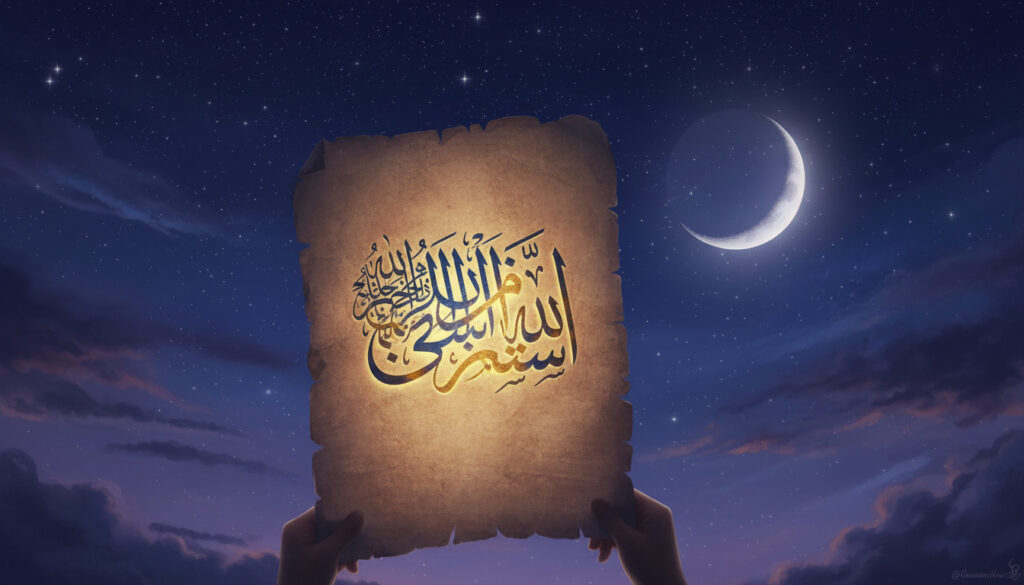
Inna Lillahi wa Inna Ilayhi Raji’un – Meaning, Pronunciation, Usage
The Arabic phrase “Inna lillahi wa inna ilayhi raji’un” (إِنَّا لِلَّٰهِ وَإِنَّا إِلَيْهِ رَاجِعُونَ) translates to “Indeed, we belong to Allah, and indeed to Him we shall return.” Recited by Muslims worldwide upon hearing news of death or facing calamity, these words originate from the Quran, specifically Surah Al-Baqarah, verse 156.
This declaration serves as both a condolence and a spiritual anchor. MyIslam notes that the phrase transforms moments of grief into acts of worship, reminding believers that Allah alone owns all souls and determines their return.
Beyond its immediate use, the expression encapsulates two fundamental Islamic concepts: tawhid (the absolute oneness of Allah) and sabr (patient perseverance). It acknowledges that human existence remains temporary, while the Creator remains eternal.
What Does Inna Lillahi wa Inna Ilayhi Raji’un Mean in English?
The phrase functions as more than translation. It represents a theological position—accepting divine decree with grace. Noor Academy describes it as acknowledging Allah’s ownership of all existence.
- Core Islamic expression of submission to Allah’s will
- Recited immediately upon hearing of a death
- Often followed by additional supplications for the deceased
- Known technically as Istirja’ (seeking refuge in Allah)
- Affirms tawhid (Divine oneness) amid loss
- Encourages sabr (patience) during hardship
- Universal across Muslim communities regardless of native language
| Attribute | Detail |
|---|---|
| Arabic Text | إِنَّا لِلَّٰهِ وَإِنَّا إِلَيْهِ رَاجِعُونَ |
| Transliteration | Innā li-llāhi wa-innā ilayhi rājiʿūn |
| Quran Reference | Surah Al-Baqarah 2:156 |
| Primary Translation | “Indeed we belong to Allah and to Him we shall return” |
| Alternative Rendering | “Surely to Allah we belong and to Him we will all return” |
| Occasion | Death, disasters, unexpected hardship |
| Theological Term | Istirja’ |
| Core Concepts | Tawhid, Sabr, Return to Creator |
When Should You Recite Inna Lillahi wa Inna Ilayhi Raji’un?
Islamic jurisprudence establishes specific moments for this invocation. While commonly associated with funerals, its usage extends to any significant loss or trial.
Upon News of Death
The primary occasion occurs immediately upon learning of a death. Whether the deceased is a close relative, distant acquaintance, or even a stranger, the believer utters these words to acknowledge Allah’s sovereignty over life and death. Guidance on funeral etiquette confirms this as the immediate response.
During Personal Calamities
The Quran specifically mentions those who say this phrase “when afflicted with calamity.” This encompasses financial ruin, serious illness, accidents, or natural disasters. The invocation applies to any discomfort that tests faith.
Reciting Istirja’ transforms grief into worship, affirming that Allah alone controls destiny and grants patience to those who seek it.
How Do You Pronounce and Transliterate Inna Lillahi?
Accurate pronunciation honors the sacred nature of these words, though mercy applies to those learning.
Word-by-Word Breakdown
Linguistic analysis reveals the following components:
- Inna: Indeed, truly, or verily we
- Li-llahi: We belong to Allah (with emphasis on doubled “l”)
- Wa Inna: And indeed we
- Ilayhi: Towards Him
- Rajiun: We shall return (or will return)
Phonetic Guides
The phonetic breakdown reads: [In-nah Lil-la-hee Wa In-na e-Lay-hee Raa-jee’-oon]. Audio resources emphasize holding doubled consonants slightly longer, particularly the “ll” in Lillahi.
Common transliteration variants include “innalillahiwainnailaihirojiun” or “inna lillahi wa inallah rajioon,” though these represent identical pronunciations.
For those working with Arabic script in various linguistic contexts, Translation English to Urdu – Best Free Tools 2025 offers resources for understanding script conversions.
What Is the Full Dua and Proper Response?
The initial phrase typically opens a longer supplication transmitted through prophetic tradition.
The Extended Supplication
Umm Salamah (RA) narrated that the Prophet instructed believers to follow “Inna lillahi wa inna ilayhi raji’un” with: “O Allah! I seek reward from You for my affliction, so reward me for it and grant me something better.” Traditional preservation maintains this as standard practice.
How to Reply
When receiving condolences using this phrase, the complete response continues: “Allahumma ajirni fi musibati wa akhlifni khayran minha” (O Allah, reward me in my affliction and replace it with better).
The full ritual involves acknowledging the return to Allah, then specifically asking for reward and replacement with something better.
Some believe this phrase exclusive to funerals, but scholarly explanation confirms its use for any disaster or unexpected hardship.
How Has This Phrase Transmitted Through Islamic History?
- : Allah reveals verse 2:156 in Medina describing believers who respond to calamity with the declaration of return.
- : Muhammad (PBUH) models specific etiquette for reciting Istirja’ following personal losses, establishing sunnah.
- : By the third century AH, jurists establish ijma’ (consensus) on its recommended or obligatory nature upon confirmed death news.
- : Today the phrase appears in digital condolences, social media memorials, and spoken comfort across global Muslim communities.
What Do Scholars Confirm Versus What Remains Unclear?
| Established with Certainty | Areas of Flexibility |
|---|---|
| Quranic origin from Surah Al-Baqarah 2:156 | Specific tonal variations in pronunciation (regional accents accepted) |
| Meaning: “Indeed we belong to Allah and to Him we return” | Exact timeframe (immediate vs. within hours of hearing news) |
| Consensus usage upon death news | Whether to say it audibly or silently in public spaces |
| Connection to patience (sabr) and divine oneness (tawhid) | Minor variations in accompanying dua wording |
Scholarly agreement remains solid on the phrase’s meaning and primary occasion, with flexibility surrounding pronunciation details and secondary etiquette.
Why Does This Phrase Resonate Across Cultures?
Beyond linguistics, the declaration reinforces tawhid—the absolute oneness of Allah. Recognizing that we belong to Allah and return to Him places worldly losses in eternal perspective. This concept nurtures sabr, not as passive resignation but as active trust in divine wisdom.
The universality of grief makes this phrase transportable across languages. Whether spoken in Arabic, translated into English, or rendered in Urdu through Translation English to Urdu – Best Free Tools and Apps 2025, the theological weight remains constant.
Where Do These Teachings Originate?
“Who, when afflicted with calamity, say: ‘Surely we belong to Allah and to Him shall we return.'”
— Quran 2:156
Umm Salamah (RA) transmits the prophetic guidance regarding the extended supplication, preserving the exact formulation Muslims use today. MyIslam documents these chains of transmission, connecting contemporary practice to original sources.
What Are the Essential Points to Remember?
This phrase represents more than ritual condolence; it constitutes active spiritual practice. Reciting “Inna lillahi wa inna ilayhi raji’un” upon hearing death news or facing trials acknowledges Allah’s sovereignty while seeking patience to endure. The word-for-word meaning—”Indeed we belong to Allah”—reminds believers that all returns to the Creator, transforming grief into worship grounded in the certainty of return.
Frequently Asked Questions
Is this phrase only for funerals?
No. While commonly used at funerals, Islamic teachings recommend it for any calamity, loss, or unexpected hardship, from minor inconveniences to major disasters.
Do I need ablution (wudu) before saying it?
No specific purification is required for this supplication, though maintaining general ritual cleanliness is always encouraged in Islamic practice.
Can I say this phrase in English?
The Arabic carries specific spiritual weight, but if unable to pronounce it, the English translation “Indeed we belong to Allah and to Him we return” conveys the essential meaning.
What if I cannot pronounce the Arabic correctly?
Scholars agree that sincere effort suffices. The doubled consonants and vowel length matter for precision, but Allah judges intention over perfect pronunciation.
Is there a time limit for when I should say it?
Ideally immediately upon hearing the news, but saying it later upon remembering the deceased or the calamity still holds spiritual benefit and fulfills the practice.
Should women and men say it differently?
No, the phrase and its accompanying supplication are identical for all genders in Islamic tradition, with no variation in wording or pronunciation required.
More related posts
 MAFS Australia Season 12: Couples Still Together & Cast Now
 Birmingham City FC News – Championship Update, Fixtures and Transfers
 How Much Have I Cost the NHS – Annual Average and Lifetime Breakdown
 Capital of Northern Ireland: Belfast Facts, History & UK Role
 Warren James Near Me – Find UK Stores & Opening Hours
 How Can I Contact Debenhams Customer Services? No Phone Guide
 Premier League Fixture Thi Weekend: Final Day Schedule
 Track My International Parcel – Best Free Tracking Tools