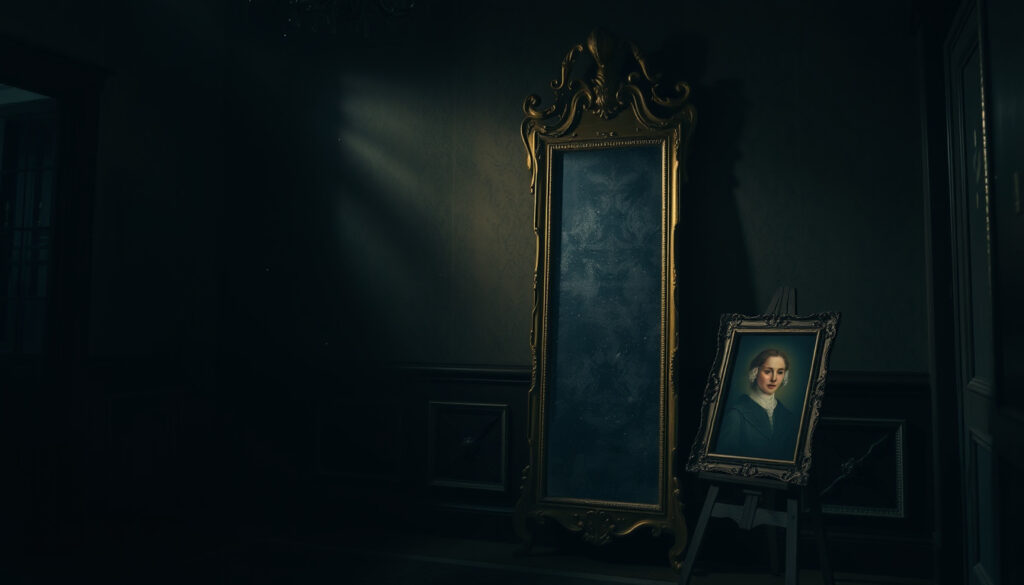
The Picture of Dorian Gray: Plot, Themes & Controversy
Few novels capture the public imagination quite like Oscar Wilde’s The Picture of Dorian Gray. Over a century after its first publication, the story of a handsome young man who trades his soul for eternal youth still resonates in an age obsessed with image and fame. This guide unpacks the plot, themes, and controversies — and examines why the book remains as provocative today as it was in 1890.
Author: Oscar Wilde · Published: 1890 (first version), 1891 (expanded) · Genre: Philosophical fiction, Gothic horror · Original language: English · Page count (first edition): 254 · Notable adaptation: 1945 film directed by Albert Lewin
Quick snapshot
- Oscar Wilde wrote the novel, first serialized in Lippincott’s Monthly Magazine in 1890 (Wikipedia (comprehensive encyclopedia)).
- Dorian Gray murders painter Basil Hallward (The Darling Axe (literary analysis blog)).
- Sybil Vane commits suicide after Dorian rejects her (Study.com (educational platform)).
- The exact wording of Oscar Wilde’s deathbed words (Loughborough University (academic English department)).
- Whether Wilde truly converted to Catholicism immediately before death (Loughborough University (academic English department)).
- Whether Dorian Gray is explicitly intended as a homosexual character (Boston University Writing Program (academic literary journal)).
- 1890 – Serialized in Lippincott’s (Wikipedia (comprehensive encyclopedia)).
- 1891 – Expanded book edition published (Wikipedia (comprehensive encyclopedia)).
- 1895 – Novel used as evidence in Wilde’s trial (Loughborough University (academic English department)).
- Multiple film adaptations continue, with a 2023 series in development (Wikipedia (comprehensive encyclopedia)).
- Queer readings and academic analysis grow in prominence (Boston University Writing Program (academic literary journal)).
A quick reference of key details about the novel.
| Attribute | Detail |
|---|---|
| Author | Oscar Wilde |
| First published | 1890 (Lippincott’s Monthly Magazine); 1891 (expanded book) |
| Genre | Philosophical fiction, Gothic horror, decadent literature |
| Original language | English |
| Page count (common paperback) | 254 |
| Main setting | London, late 19th century |
| Notable adaptation | 1945 film (Albert Lewin) |
| Central symbol | The portrait |
What is The Picture of Dorian Gray all about?
Plot summary
- Dorian Gray is a breathtakingly handsome young man whose portrait is painted by the artist Basil Hallward (Wikipedia (comprehensive encyclopedia)).
- Under the influence of the cynical hedonist Lord Henry Wotton, Dorian utters a wish: that the portrait would age and bear the marks of his sins while he remains forever young (SparkNotes (study guide publisher)).
- His wish takes effect, and he pursues a life of sensual pleasure, blackmail, and murder while the painting grows grotesque (Old Style Tales (literary analysis site)).
- After killing Basil, Dorian tries to destroy the portrait with a knife — but stabs himself instead, and his body instantly ages and decays (Old Style Tales (literary analysis site)).
Dorian’s fatal mistake is believing the soul and body can be separated. Old Style Tales notes the portrait symbolizes the indivisibility of soul and body — a lesson Wilde forces on his protagonist.
The implication: Dorian’s wish sets the stage for a life where appearance and reality diverge catastrophically.
Why is The Picture of Dorian Gray so controversial?
When The Picture of Dorian Gray appeared, Victorian critics attacked it as immoral and decadent. The controversy deepened when the novel was used as evidence in Wilde’s 1895 trial for gross indecency (Loughborough University (academic English department)).
Allegations of immorality and indecency
- Critics accused Wilde of promoting hedonism and corrupting youth (Loughborough University (academic English department)).
- The novel was heavily censored in later editions and temporarily banned in some countries.
- Arthur Conan Doyle, however, viewed it as a moral tale where sin is punished (Loughborough University (academic English department)).
The paradox: a book that celebrates beauty also shows its pursuit leading to ruin. As Boston University (academic literary journal) scholars note, the novel can be read as a conservative cautionary tale wrapped in a glittering aesthetic package.
The pattern: the controversy itself mirrors the novel’s central tension — beauty and morality at odds.
Is Dorian Gray LGBTQ?
The novel contains unmistakable homoerotic undertones, especially in Basil’s adoration of Dorian and Lord Henry’s flirtatious influence. Wilde himself was a homosexual man who faced prosecution (Loughborough University (academic English department)).
Modern interpretations and queer readings
- Scholars debate whether Dorian Gray should be read as an LGBTQ character. Some see him as a symbol of repressed homosexuality or of what happens when desire cannot be named (Boston University Writing Program (academic literary journal)).
- The phrase “Homosexual Panic and Necropolitics” appears in academic criticism.
- The 2009 film adaptation made the gay subtext explicit (Wikipedia (comprehensive encyclopedia) – adaptations).
Why did Dorian dump Sybil?
Sybil Vane is a young actress whose performances enchant Dorian. When she confesses her love and her acting suddenly becomes wooden, Dorian cruelly rejects her (Study.com (educational platform)).
Dorian’s cruel rejection and its aftermath
- Dorian tells Sybil she has “killed his love” because her offstage self is real, not theatrical (SparkNotes (study guide publisher)).
- Sybil commits suicide that same night.
- Instead of remorse, Dorian notices his portrait now wears a cruel smirk — the first visible mark of his moral decay (Old Style Tales (literary analysis site)).
Sybil’s death is the hinge of the novel: it confirms that Dorian’s soul is truly ugly now, even though his face remains beautiful.
What did Oscar Wilde say on his deathbed?
Oscar Wilde died in Paris in 1900, reportedly converting to Catholicism on his deathbed. Accounts of his final words vary widely (Loughborough University (academic English department)).
Conflicting accounts and historical context
- One story claims he said of his wallpaper: “One of us had to go.”
- Another claims he said, “I have been a man who lived for pleasure, and I die for pleasure.”
- Scholars debate whether the conversion story was embellished by later biographers (Loughborough University (academic English department)).
What is certain: Wilde ended his life bankrupt and isolated, a stark contrast to the glittering celebrity he once was. His final days mirror Dorian’s — the mask of youth stripped away, leaving only ruin.
What are the major adaptations of The Picture of Dorian Gray?
The novel has inspired dozens of adaptations across film, television, stage, and radio.
Film adaptations
- 1945 film directed by Albert Lewin, starring Hurd Hatfield. It won an Academy Award for Best Cinematography (Wikipedia (comprehensive encyclopedia) – adaptations).
- 2009 film starring Ben Barnes, which includes a more explicit same-sex attraction storyline.
- A 2023 series is reported to be in development, though no streaming release date has been confirmed.
Stage versions, BBC radio dramas, and an opera have also been produced. The story’s core — the tension between appearance and reality — proves endlessly adaptable.
Clarity check: confirmed vs. unclear
Confirmed facts
- Oscar Wilde wrote The Picture of Dorian Gray (Wikipedia (comprehensive encyclopedia)).
- The novel was published in 1890 and expanded in 1891 (Wikipedia (comprehensive encyclopedia)).
- Sybil Vane commits suicide after Dorian rejects her (Study.com (educational platform)).
- Dorian murders Basil Hallward (The Darling Axe (literary analysis blog)).
- The portrait shows Dorian’s moral corruption (SparkNotes (study guide publisher)).
- Wilde was convicted of gross indecency in 1895 (Loughborough University (academic English department)).
What’s unclear
- The exact wording of Wilde’s deathbed words (Loughborough University (academic English department)).
- Whether Wilde truly converted to Catholicism immediately before death (Loughborough University (academic English department)).
- Whether Dorian Gray is explicitly intended as a homosexual character (Boston University Writing Program (academic literary journal)).
- The real-life inspiration for the yellow book (SparkNotes (study guide publisher)).
- Whether Wilde intended a moral warning or a celebration of aestheticism.
“The only way to get rid of a temptation is to yield to it.”
Lord Henry Wotton, The Picture of Dorian Gray
“It is the real Dorian Gray — that is all.” — Basil Hallward, defending his portrait.
“This book is a work of art, pure and simple, and it must be judged as such.” — Oscar Wilde, in a letter responding to criticism (Loughborough University (academic English department)).
“Wilde’s novel dramatizes the fear of the homosexual as a secret agent of corruption.” — Scholar Elaine Showalter (Boston University Writing Program (academic literary journal)).
The implication: Dorian Gray’s tragedy is not just personal. It mirrors a society that worships surfaces while hiding rot beneath.
A detailed analysis of the novel’s themes and controversy is available in a detailed analysis of the novel.
Frequently asked questions
What is the meaning of the portrait in The Picture of Dorian Gray?
The portrait represents Dorian’s soul — it ages and decays while he remains physically young. It symbolizes the indivisibility of soul and body and the inescapable consequence of moral choices.
Who is Lord Henry Wotton in the novel?
Lord Henry is a cynical, hedonistic aristocrat who influences Dorian to pursue pleasure without morality. His aphorisms drive the novel’s philosophical tension.
Is The Picture of Dorian Gray based on a true story?
No, but Wilde drew on classical myths (Narcissus, Faust) and possibly the real-life story of his own life and the lives of Victorian aesthetes.
What is the significance of the yellow book?
The yellow book (loosely based on J.-K. Huysmans’ À rebours) becomes Dorian’s guide to immoral behavior, corrupting him over nearly two decades (SparkNotes (study guide publisher)).
How does the novel end?
Dorian stabs the portrait in a rage; the knife enters his own heart. His body instantly becomes ancient and hideous, while the portrait returns to its original beauty.
What are the main symbols in The Picture of Dorian Gray?
Key symbols include the portrait (the soul), the yellow book (corruption), the opium dens (moral descent), and the theater (illusion vs. reality).
What is aestheticism and how does the novel relate to it?
Aestheticism holds that art should provide sensual pleasure rather than moral instruction. The novel critiques this philosophy by showing Dorian’s ruthless application of it — revealing that beauty without ethics destroys both.
Related reading
- Tinker Tailor Soldier Spy: Book, TV Miniseries & Film Guide
- Everything I Know About Love – Summary, Themes, TV Adaptation
For anyone tempted to prioritize appearance over substance, the lesson of Dorian Gray remains as sharp as ever: a flawless surface can hide a rotten core, and the price of ignoring that truth is everything.
More related posts
 Cillit Bang Black Mould Remover – Reviews, Instructions & Safety Guide
 Online Home Shop Discount Code: Get 15% Off & More (June 2026)
 Snooker Today on TV: UK Schedule, Start Time & Channel
 NatWest Share Price Today: Live Data, Decline & Forecast
 MAFS Australia Season 12: Couples Still Together & Cast Now
 Leeds United vs Manchester United FC: timeline and rivalry
 Cast of The Bondsman: Cancellation and Full List
 Nicholas Brendon dead at 54: Buffy star’s cause of death